
Navigation
Install the app
How to install the app on iOS
Follow along with the video below to see how to install our site as a web app on your home screen.
Note: This feature may not be available in some browsers.
More options
You are using an out of date browser. It may not display this or other websites correctly.
You should upgrade or use an alternative browser.
You should upgrade or use an alternative browser.
Latest Film School Reviews

Reviewed by:
Current Applicant
Degree: BA/BS/BFA
Degree: BA/BS/BFA
Pros
- This is a very small school with great networking opportunities.
- The film school is allowed to borrow makeup artists, actors, dancers, etc. from the other schools at
- You start making movies your freshman year as opposed to sitting in lots of classes.
- The alumni are crewing award winning movies currently.
- There is a street with building facades that you can change for your film.
- The school pays for your films
Cons
- This is a small school and lots of people really enjoy large campuses.
- Also, gossip travels fast because there are only a few people in your class.
- The school is positioned in a sort of sketchy part of town (which isn't really a problem bc the scho
- The school owns the content you create because they funded it.
Overall, this is my first choice out of all the schools I want to go to next year because they work you like you are going to work in the industry. You have the ability to work on other students' projects every weekend and gain that experience early on. As a freshmen you work in every single position in a project. You direct your own film and then work as an editor on your friend's and then again as a DP on someone else's project and so on. This school's approach to teaching is the very definition of hands-on and that experience is more valuable than what most other schools can offer with their many required classroom courses before you're allowed to even touch a camera.
Also, I'm very attracted to the opportunity to work as every single role on a project. If you don't necessarily know what area you want to focus on, you have the ability to test everything out and figure out what you are good at. Junior year is when the faculty helps you declare your "major."
Also, I'm very attracted to the opportunity to work as every single role on a project. If you don't necessarily know what area you want to focus on, you have the ability to test everything out and figure out what you are good at. Junior year is when the faculty helps you declare your "major."
2 members found this helpful.
Last edited by a moderator:



- Operator
- 4.00 star(s)
- Reaction score: 2
Reviewed by:
Alumni
Degree: BA/BS/BFA
Degree: BA/BS/BFA
Pros
- Professors don't restrict what subject/genre can be filmed for student projects unless you are in Pr
- The professors who still work in the business actually live in Los Angeles and fly in once a week.
Cons
- Some professors have been out of the business for a long time
I attended this school from Jan 2015 to Dec 2016 after transferring in from a community college. Overall, I had a great experience. As with any college, you will have professors/instructors that you hate and are full of themselves. One thing about this school that really annoyed me is, when students skip half the semester they still get A's. It seems like a lot of professors just give a blanket grade to the entire class. The horror movie class in the summer semester is great. It's taught by the writer/director of Puppet Master.
RateMyProfessor is a great website to determine what classes to take. Stay away from any classes taught by West McDowell and/or May Luong and any production classes taught by and Kynan Dias. Any other classes taught by Kynan are absolutely great. Jason, the guy who runs the equipment room and teaches some classes, is always willing to help students outside of class. Very approachable. Take any class you can with Professor Sean Clark. He is by far the best professor there.
RateMyProfessor is a great website to determine what classes to take. Stay away from any classes taught by West McDowell and/or May Luong and any production classes taught by and Kynan Dias. Any other classes taught by Kynan are absolutely great. Jason, the guy who runs the equipment room and teaches some classes, is always willing to help students outside of class. Very approachable. Take any class you can with Professor Sean Clark. He is by far the best professor there.
One member found this helpful.
Last edited by a moderator:


- Romano Natale
- 5.00 star(s)
Reviewed by:
Alumni
Pros
- Great staff, Great location, Great experience.
Cons
- You can't stay at the program forever.
Well I couldn't figure out how to make this site give them more stars. I had an amazing experience at The International Film Institute of New York in the 5 week summer intensive . First the Sarah Lawrence Campus is beautiful and is a great location right near the City if you want to visit it in your free time. This Course is run like a Graduate level class crammed into 5 short weeks in which you will learn more about film than you can at any other program. I had Keola as my script supervisor who not only helped me through my 15 separate drafts, but also helped me outside of the class with my script and taught me things that I will carry with me throughout my career in film. For My directing advisor I had the honor of being taught by Jesus Alarcon who not only broke-down the elements of story telling in a multitude of short films, but helped teach us how to plan out our shooting so when we are on set we aren’t having the actors, who we casted in New York City, sit around waiting to be used.
The fact that we were able to write shoot and edit our own films in this program was amazing. But it got better. When we were there there was a feature set that was shooting on the campus starring Richard Gere. Misial (the head of the program) helped get a few of us on set as PA's which made my year. It was a lot of fun to be at the program. Misial and his wife Donella are the best and most helpful people ever and supported all of us through our filmmaking process.
This program is the experience of a lifetime. I highly recommend it to anyone that is interested in film.
The fact that we were able to write shoot and edit our own films in this program was amazing. But it got better. When we were there there was a feature set that was shooting on the campus starring Richard Gere. Misial (the head of the program) helped get a few of us on set as PA's which made my year. It was a lot of fun to be at the program. Misial and his wife Donella are the best and most helpful people ever and supported all of us through our filmmaking process.
This program is the experience of a lifetime. I highly recommend it to anyone that is interested in film.

Reviewed by:
Alumni
Degree: MA/MFA
Concentration: Producing
Degree: MA/MFA
Concentration: Producing
Pros
- Great staff -- very approachable, esteemed industry vets / pros
- Beautiful campus
- Strong curriculum
- Meaningful projects
- Students own their films
- Money from tuition is allocated toward film project budgets, so you don't have to raise the money
- Amazing reputation (and growing)
- Growing alumni base
- Fantastic facilities
Cons
- Very expensive (though again, a good value in relation to comparable schools / programs)
- Slightly far from LA (especially dealing with traffic)
- Small alumni base
- Chapman Filmed Entertainment seems very cliquey with who they've given opportunities to
- Classes get cancelled a little too frequently (due to adjuncts having business to attend to)
- Still fairly new, so a lot of people outside LA/OC don't know about it
I attended Chapman's MFA Producing Program from 2010-2012, immediately after finishing undergrad. My experience was a good one overall. I produced several award-winning shorts and was taught by a lot of leading industry veterans. I met and collaborated with a lot of talented people and have kept in touch with many of them who are doing great things. I received a $4,000 per semester fellowship, which really helped with expenses.
I will say that grad school is sort of what you make it. You can just take the classes and go through the motions to get the degree, but to get hands-on experience, you'll need to put in the work. You'll need to have internships, develop side projects, shoot and edit non school-related projects, and build relationships with classmates that will turn into industry relationships in the future.
It's expensive, but it's one of the most highly-regarded film programs in the world. If you want to work in any facet of the industry, you'll be prepared. If you want to teach, you'll also be prepared. I would definitely recommend this program to anyone who isn't completely dead-set on attending one of the bigger name programs just because of the name. Chapman has the same level of faculty, better facilities, and is cheaper than the others, but is just as highly-regarded in the industry.
I had to limit my pros and cons in the above, so here are the rest of the:
PROS
-Great location (beautiful area with not too much congestion)
-Great guest lecturers and screening opportunities
-Chapman Filmed Entertainment
-Opportunity to work on as many student projects as you want
-Opportunity to take classes outside your chosen track
-Tuition in reference to comparable film schools (but still expensive)
-Fellowship opportunities to alleviate tuition costs
-Don't need to take the GRE (at least when I went)
-Small class sizes for grad programs
-Always at the top of the "nation's best film schools" lists
-Chapman, in general, has a great university reputation
CONS
-Not a ton of internship opportunities through the school (you have to go out and search on your own)
I will say that grad school is sort of what you make it. You can just take the classes and go through the motions to get the degree, but to get hands-on experience, you'll need to put in the work. You'll need to have internships, develop side projects, shoot and edit non school-related projects, and build relationships with classmates that will turn into industry relationships in the future.
It's expensive, but it's one of the most highly-regarded film programs in the world. If you want to work in any facet of the industry, you'll be prepared. If you want to teach, you'll also be prepared. I would definitely recommend this program to anyone who isn't completely dead-set on attending one of the bigger name programs just because of the name. Chapman has the same level of faculty, better facilities, and is cheaper than the others, but is just as highly-regarded in the industry.
I had to limit my pros and cons in the above, so here are the rest of the:
PROS
-Great location (beautiful area with not too much congestion)
-Great guest lecturers and screening opportunities
-Chapman Filmed Entertainment
-Opportunity to work on as many student projects as you want
-Opportunity to take classes outside your chosen track
-Tuition in reference to comparable film schools (but still expensive)
-Fellowship opportunities to alleviate tuition costs
-Don't need to take the GRE (at least when I went)
-Small class sizes for grad programs
-Always at the top of the "nation's best film schools" lists
-Chapman, in general, has a great university reputation
CONS
-Not a ton of internship opportunities through the school (you have to go out and search on your own)
3 members found this helpful.
Last edited by a moderator:
Reviewed by:
Alumni
Pros
- Strong curriculum. Dedicated staff. Access to facilities, equipment, and instruction.
I attended the five week IFI summer film intensive during the summer of 2016. I was initially apprehensive about the program, as I wasn’t sure what I was going to get. I found the schedule to be promising, but I was worried because I didn’t have a whole lot of info on what I was going to get in terms of other people. I actually read a review on this site and decided to take my chance.
The program turned out to be exactly what I had hoped it would be. The program was very well run and incredibly well structured. I was ready to shoot a film after three weeks. And I went in there with nothing—I didn’t have a script, I didn’t have any previous experience in production. I came out of the program feeling like I had a good foundation on everything from script writing to casting. I came out feeling like I was ready to be a filmmaker.
What surprised me the most was the quality of the instruction and the dedication of the staff. They made themselves available. They made sure films got made. They cared. I really appreciated that.
I would strongly recommend this program to a friend, especially if he or she has a strong interest in filmmaking. This program really teaches you everything in a very short time. I was very very happy with the program.
The program turned out to be exactly what I had hoped it would be. The program was very well run and incredibly well structured. I was ready to shoot a film after three weeks. And I went in there with nothing—I didn’t have a script, I didn’t have any previous experience in production. I came out of the program feeling like I had a good foundation on everything from script writing to casting. I came out feeling like I was ready to be a filmmaker.
What surprised me the most was the quality of the instruction and the dedication of the staff. They made themselves available. They made sure films got made. They cared. I really appreciated that.
I would strongly recommend this program to a friend, especially if he or she has a strong interest in filmmaking. This program really teaches you everything in a very short time. I was very very happy with the program.

Reviewed by:
Alumni
Degree: MA/MFA
Concentration: Directing Fiction
Degree: MA/MFA
Concentration: Directing Fiction
Pros
- Other students, small class sizes, equipment, teachers
Cons
- Hard to get in, very little time to do anything other than study at the school
This wasn't my experience at all!! I'm not sure we went to the same NFTS.
I can't speak more highly of time at the NFTS. I almost went to the LFS then realised it was twice as expensive as the NFTS and that there was no gaurantees I'd get to direct all the projects I worked on.
The tutors were really helpful, the equipment was very good and the other students were all really talented and committed. I didn't have much to do with Nik Powell or Jon Wardle (those two meetings you had were assessments!!), but when I did they were always really helpful.
Sorry you had a bad experience but I don't know anyone personally who went to the School who has anything other than good things to say about the place
I can't speak more highly of time at the NFTS. I almost went to the LFS then realised it was twice as expensive as the NFTS and that there was no gaurantees I'd get to direct all the projects I worked on.
The tutors were really helpful, the equipment was very good and the other students were all really talented and committed. I didn't have much to do with Nik Powell or Jon Wardle (those two meetings you had were assessments!!), but when I did they were always really helpful.
Sorry you had a bad experience but I don't know anyone personally who went to the School who has anything other than good things to say about the place
One member found this helpful.
Last edited by a moderator:
Reviewed by:
Alumni
Degree: MA/MFA
Concentration: Directing Fiction
Degree: MA/MFA
Concentration: Directing Fiction
Pros
- Masterclasses with major filmmakers.
- Film budgets provided by school.
Cons
- Money, the game, politics, atmosphere, teachers.
Hi, please find below repost of a review I posted in response to a similar review written by "NFTS Graduate" on a thread called "Anyone know anything about NFTS?" (I'd suggest checking out that thread too).
MONEY
The course is very expensive and you'll have to either move to Beaconsfield or do a hell of a commute. I hate to say it, but the school operates as a studio and you are labouring for free to promote the school.
THE GAME
NFTS is the most ruthless, cut throat environment I have ever been in. Nik Powell (head of the school) will only help certain people -his favourites. Often the people he helps are the ones that have proved themselves to be utterly ruthless - a girl comes to mind who stole another girls work who was a favourite of Nik's. Jon Wardle, the registrar, is a total bully, and you'll have to go through a couple of excruciatingly patronising and insulting interviews with him before you're allowed to graduate.
Yes--getting in is just the beginning! Once there, you can be expect to be pushed to your absolute limit by your teachers - very few of whom are actually nice people. It is common to see people having total emotional crying meltdowns during and after reviews from teachers. I encountered a couple of teachers who were downright sadistic and seemed to want to see me fail (which I didn't, and the both teachers both left whilst I was still there, thankfully).
The political tension within the school is unbelievable. Teachers having affairs with each others wives, wtf! During my tenure, a visiting tutor who had her eye on the position of head of documentary department (which was already filled by someone who had been doing it for years) tried to sabotage the entire department in her attempt to steal this guy's job from him. This had such a knock on effect that the filming of all 8 documentaries that year had to be postponed.
ATMOSPHERE
The most bitchy, fake atmosphere I've been in since my days at an elitist boarding school. Everyone is in so much fear about being criticised that they constantly bitch about everyone else and bring other people down to try to take the heat off themselves. NFTS will take the nicest, purest person into a selfish ****. I know, it happened to me.
Obviously, you're in a small town, you're under a lot of pressure and you're creatives - you're going to end up partying very hard at times and hook-ups will happen. Be prepared for everyone in the school to be salivating over the juicy details of what you did the next Monday! Yes, this is more high school than high school itself.
FINAL THOUGHTS
This place very much reflects the nature of the film industry. But you should be getting paid a hell of a lot for working so hard and under as much stress as you do at NFTS. Be very, VERY wary of the way they promote their successful graduates and imply that it will never be difficult for an NFTS grad to get work, which is not true. Once you graduate, NFTS does not have a use for you anymore, and it will be very difficult to get the school to hook you up with their connections unless they are convinced you are the next big thing.
MONEY
The course is very expensive and you'll have to either move to Beaconsfield or do a hell of a commute. I hate to say it, but the school operates as a studio and you are labouring for free to promote the school.
THE GAME
NFTS is the most ruthless, cut throat environment I have ever been in. Nik Powell (head of the school) will only help certain people -his favourites. Often the people he helps are the ones that have proved themselves to be utterly ruthless - a girl comes to mind who stole another girls work who was a favourite of Nik's. Jon Wardle, the registrar, is a total bully, and you'll have to go through a couple of excruciatingly patronising and insulting interviews with him before you're allowed to graduate.
Yes--getting in is just the beginning! Once there, you can be expect to be pushed to your absolute limit by your teachers - very few of whom are actually nice people. It is common to see people having total emotional crying meltdowns during and after reviews from teachers. I encountered a couple of teachers who were downright sadistic and seemed to want to see me fail (which I didn't, and the both teachers both left whilst I was still there, thankfully).
The political tension within the school is unbelievable. Teachers having affairs with each others wives, wtf! During my tenure, a visiting tutor who had her eye on the position of head of documentary department (which was already filled by someone who had been doing it for years) tried to sabotage the entire department in her attempt to steal this guy's job from him. This had such a knock on effect that the filming of all 8 documentaries that year had to be postponed.
ATMOSPHERE
The most bitchy, fake atmosphere I've been in since my days at an elitist boarding school. Everyone is in so much fear about being criticised that they constantly bitch about everyone else and bring other people down to try to take the heat off themselves. NFTS will take the nicest, purest person into a selfish ****. I know, it happened to me.
Obviously, you're in a small town, you're under a lot of pressure and you're creatives - you're going to end up partying very hard at times and hook-ups will happen. Be prepared for everyone in the school to be salivating over the juicy details of what you did the next Monday! Yes, this is more high school than high school itself.
FINAL THOUGHTS
This place very much reflects the nature of the film industry. But you should be getting paid a hell of a lot for working so hard and under as much stress as you do at NFTS. Be very, VERY wary of the way they promote their successful graduates and imply that it will never be difficult for an NFTS grad to get work, which is not true. Once you graduate, NFTS does not have a use for you anymore, and it will be very difficult to get the school to hook you up with their connections unless they are convinced you are the next big thing.
Last edited by a moderator:
Reviewed by:
Alumni
The One Week Seminar was a fulfilling experience. If you have even the slightest interest in film but find yourself stumped as to where to begin then this is the place for you. The week flies by but you would be amazed at how much you can retain.The curriculum covers all the fundamental processes of filmmaking from development to distribution. There is a lot to take in. Especially when you get into camera or editing specifics. While some material may come off as too dry ( I didn't think so but not everyone may agree) it is important to understand all the mechanics of the filmmaking process.
The instructors were emphatic and their unique idiosyncrasies make them and their lessons memorable. With only a few hours to impart as much as possible, they try their best to answer every question and develop the interests of all the students. Given the time constraints it is your responsibility to take what they give you and run with it. They recommend a ton of great reading material and online resources to complement what they have taught in the classroom.
Be diligent with your note taking and it helps to come prepared with ideas for a film or screenplay. Don't worry if you miss something because they do provide informative handouts. Ask as many questions as possible! Before, during, and after class. Get everyone's contact information. Stay in touch.
Your relationship with the instructors does not end with the seminar. IFI is passionate about building a film community and are making strides to improve with each successive seminar. A great group of individuals who love to hear what their students have to offer and promote a collaborative environment in and out of the classroom.
The instructors were emphatic and their unique idiosyncrasies make them and their lessons memorable. With only a few hours to impart as much as possible, they try their best to answer every question and develop the interests of all the students. Given the time constraints it is your responsibility to take what they give you and run with it. They recommend a ton of great reading material and online resources to complement what they have taught in the classroom.
Be diligent with your note taking and it helps to come prepared with ideas for a film or screenplay. Don't worry if you miss something because they do provide informative handouts. Ask as many questions as possible! Before, during, and after class. Get everyone's contact information. Stay in touch.
Your relationship with the instructors does not end with the seminar. IFI is passionate about building a film community and are making strides to improve with each successive seminar. A great group of individuals who love to hear what their students have to offer and promote a collaborative environment in and out of the classroom.


- lchenye
- 4.00 star(s)
- Reaction score: 1
Reviewed by:
Admitted Applicant
Degree: MA/MFA
Concentration: Producing
Degree: MA/MFA
Concentration: Producing
Pros
- Clear Instructions
- Not much required documents or works
- Quick responding contacts.
- The apply site is friendly.
I applied UCLA, CalArts, Chapman and LMU for the 2016 fall and as a result I got rejected from UCLA and Chapman, waitlisted from CalArts and admitted from LMU. Honestly I don't remember much details about the apply process, but these school it is not hard to apply, they don't require too much documents or work sample and have clear instruction.
I believed LMU's requirements(portfolio, PS, etc.) are quite focus on "get to know you personally". They require a 5-page personal statement and a self-interview-telling-true-story and books and movies you like. I think it may because they have a small program. My GPA is quite low 80/100 and it may fall down under 3.0 under different calculation way so technically I need GRE score. But GRE actually submitted my score after they gave me the admission email, it can tell something I think. The school officer were very helpful, questions were replied efficiently with patient.
Anyway, application to LMU is quite "friendly" I think.
PS, Forgive my messy words, English is not my first language and now it is not my soberest moment. Good luck to everyone want to apply to film school!
I believed LMU's requirements(portfolio, PS, etc.) are quite focus on "get to know you personally". They require a 5-page personal statement and a self-interview-telling-true-story and books and movies you like. I think it may because they have a small program. My GPA is quite low 80/100 and it may fall down under 3.0 under different calculation way so technically I need GRE score. But GRE actually submitted my score after they gave me the admission email, it can tell something I think. The school officer were very helpful, questions were replied efficiently with patient.
Anyway, application to LMU is quite "friendly" I think.
PS, Forgive my messy words, English is not my first language and now it is not my soberest moment. Good luck to everyone want to apply to film school!
2 members found this helpful.
Last edited by a moderator:
F
Filmjunkie
Chris- is there BFA-specific data for LMU? I think I’ve only seen MFA or overall data.

Reviewed by:
Current Student
Degree: MA/MFA
Concentration: Screenwriting/Directing
Degree: MA/MFA
Concentration: Screenwriting/Directing
Pros
- Prestigious Ivy League University
- Knowledgeable/Experienced Faculty
- Track record of successful alumni
- Diverse student body
Cons
- Isolation from other years/depts
- Lack of up-to-date equipment
- Some faculty issues
- Cost of living
- Narrow storytelling focus
I am at the end of my first year in the Screenwriting/Directing MFA at Columbia University. I wanted to wait to give a review until the end of my first year; needed to get the lay of the land. I want to preface this by saying that I am but one student of many and my opinion is my own. Many current and former students will have different opinions/experiences, so please, if you are considering applying to/attending Columbia ask around, you will get many perspectives.
First I'll start with what I like about the Columbia Program. Certainly attending one of the "Top Five" Film MFAs in the world is a bonus. CU is often ranked as one of the best film programs in the world. I cannot compare it with other programs (since I am not a student at those schools) but I certainly believe it is a very strong program with alot to offer.
Columbia is one of the top colleges in the world, period. It's an Ivy League University and has a big alumni association and long history that is impressive. I looks great on a resume. The campus is beautiful, with some exceptions (see below) and it's located in one of the biggest cities in the world. Some people say its one of the best cities as well, but it's not Boston. As far as I am concerned there is Boston, and there is everywhere else. It's no Boston, that's for sure. I'm from Boston, in case you hadn't figured it out.
The Film Program is located in Dodge Hall on the west side of campus, close to the train station side. We share a building with the other School of the Arts programs; writing, music, fine art, ect. The film program has an entire floor, with a small theatre and classrooms. It's intimate and lots of people hang out in the hall and shoot the shit all day. I don't, but some people do.
Class sizes are small and aside from larger, full-class courses, all of the smaller classes are about 12 people, so the class time is open and intimate.
Many of the professors are really wonderful and giving and available. I'd say about half (more on this below). Their experience and insight has been invaluable. I had complete respect for all of the faculty when I started the program and many have earned and exceeded that respect.
The school focuses VERY HEAVILY on story. Structure, dramatic blocks, narrative storytelling are king, and all of the faculty do this very well. They may teach it differently, but they are all focused on stelling a story, even when discussing camera moves, blocking, ect. This is a big reason why I chose the school and I have been satisfied with the strong story focus.
Another thing I really love is the school's diversity. Nearly half, perhaps more than half, of my current class is international and I suspect we have half or more female students. The interests and perspectives of my classmates is wide and diverse. Its wonderful. And I would like to add nearly all of them are genuinely good human persons.
Columbia has had some nice successes in TV/Film and it seems we have as much a chance as everyone else. I do not feel like Columbia is an industry school, but certainly more of an indie darling. Some alums have done big studio pictures, but the school seems more focused on indie filmmakers, festival circuit films and writer/directing social drama auteurs. They always have a nice presence at prestigous festivals like Tribeca, Sundance, Cannes, ect.
I have seen a nice evolution to my work and I am pleased at where I am after one year.
My critiques are ranging. These reviews aren't meant to paint a complete picture. Life is complex, informed opinions are complex; so they should be taken individually, as one part of the whole.
Columbia is a wonderful institution, but the SOA is kind of a bastard step child. We are not research, so we do not get the nice buildings, or the renovated classrooms. Dodge Hall is wonderful for what it is, but the building is old and most of it is not updated. The heating/ac is terrible and the windows are those old heavy kind that take three people to lift.
On that same line; Columbia has never been a "production" school and it has yet to really update its equipment to be inline with other MFAs. I understood this when applying and accepting, but certainly a "Top Five" MFA program still using 1st/2nd Gen Kino's in 50lb cases and P2 Card cameras could use some updating (*** Update, the school has upgraded to Fs5 cameras for exercises and 1st and 2nd year projects with available vintage and CP2 Zeiss primes). It was a constant complaint from many of the students. Also the good gear they do have, like their sound recorders, have all been beaten to shit and always have a loose wire or a broken pot. Production-wise the school gets a C-. (*** Updated to a B- with gear upgrades and a move to a better equipment facility)
One of the tech staff spoke to our entire class during a post-production workshop and railed for ten minutes on how "terrible filmmakers" use 4k to re-frame and that 4k capture is a waste of time. While I wouldn't necessarily disagree (I do disagree actually), they should have presented 4k capture for what it truly is, a new tool that if used properly can benefit filmmakers of every kind. This is indicative of the tech and production staff which is cranky at best and dismissive often, especially to first year students. I would not say they were a "forward thinking" bunch.
It was widely agreed that most of the faculty is AMAZING and the others are a waste of tuition. This is a bit harsh in my opinion however anyone spending $60k a year is going to have high, probably unattainable expectations. I do believe the faculty is "uneven" with many amazing teachers and some teachers that are either:
1. Great filmmakers, but not great teachers
2. Past their prime (probably amazing teachers 15 years ago)
3. Do not meet my personal needs.
Of course they have no control over number three, but they have alot of control over the rest. Many students, myself included were more interested in our second year faculty. It seems many of the students were unhappy with first year faculty, many which ONLY teach first years.
There is one faculty member in particular that told some wonderful creative, hardworking students they should quit the program. This faculty member is not respected or liked by many of the students, but does not look to be leaving any time soon. So, good luck.
NYC is expensive and that sucks. The end.
Columbia is a social-drama heavy school. They focus alot on the Sundance story model. If you want to make different types of films, and there are about 10 of us this year that do, you might feel pushed, pulled and a little bit ignored. I certainly feel that some of the faculty push students heavily towards this type of story telling, even when it is not what they want to do. I have had classes where the teacher adjusted for each student, but that is a rarity, I think. Especially with the directing staff; not necessarily with the writing staff.
However, for me this is a positive, because these types of films rely heavily on story structure and I felt that was a personal weakness of mine. As long as you know this going in, you will be fine. If you don't know this, you might be butting heads with faculty and other students.
Of course because the faculty and staff are geared towards those types of films, the awards, grants and the annual film festival winners all skew that way. The annual film festival, which showcases thesis films only brings a small selection of films to LA for an industry festival. This year the five films were all international; subtitled, social dramas.
My last critique is about the lack of mixing between the years. At anyone time, there are 200-250 students in the program; in sequential years between first-year and thesis. The program has ZERO academic mixing between the years. So the students very rarely mix. They do and many work on different year projects, but the majority of students do not get to know anyone in the other years. It's crazy to me that there are not mixed year courses or projects.
Overall, I have not had too many surprises and am overwhelmingly pleased with the program so far. I am looking forward to my second year and working towards my thesis.
Good night and good luck.
First I'll start with what I like about the Columbia Program. Certainly attending one of the "Top Five" Film MFAs in the world is a bonus. CU is often ranked as one of the best film programs in the world. I cannot compare it with other programs (since I am not a student at those schools) but I certainly believe it is a very strong program with alot to offer.
Columbia is one of the top colleges in the world, period. It's an Ivy League University and has a big alumni association and long history that is impressive. I looks great on a resume. The campus is beautiful, with some exceptions (see below) and it's located in one of the biggest cities in the world. Some people say its one of the best cities as well, but it's not Boston. As far as I am concerned there is Boston, and there is everywhere else. It's no Boston, that's for sure. I'm from Boston, in case you hadn't figured it out.
The Film Program is located in Dodge Hall on the west side of campus, close to the train station side. We share a building with the other School of the Arts programs; writing, music, fine art, ect. The film program has an entire floor, with a small theatre and classrooms. It's intimate and lots of people hang out in the hall and shoot the shit all day. I don't, but some people do.
Class sizes are small and aside from larger, full-class courses, all of the smaller classes are about 12 people, so the class time is open and intimate.
Many of the professors are really wonderful and giving and available. I'd say about half (more on this below). Their experience and insight has been invaluable. I had complete respect for all of the faculty when I started the program and many have earned and exceeded that respect.
The school focuses VERY HEAVILY on story. Structure, dramatic blocks, narrative storytelling are king, and all of the faculty do this very well. They may teach it differently, but they are all focused on stelling a story, even when discussing camera moves, blocking, ect. This is a big reason why I chose the school and I have been satisfied with the strong story focus.
Another thing I really love is the school's diversity. Nearly half, perhaps more than half, of my current class is international and I suspect we have half or more female students. The interests and perspectives of my classmates is wide and diverse. Its wonderful. And I would like to add nearly all of them are genuinely good human persons.
Columbia has had some nice successes in TV/Film and it seems we have as much a chance as everyone else. I do not feel like Columbia is an industry school, but certainly more of an indie darling. Some alums have done big studio pictures, but the school seems more focused on indie filmmakers, festival circuit films and writer/directing social drama auteurs. They always have a nice presence at prestigous festivals like Tribeca, Sundance, Cannes, ect.
I have seen a nice evolution to my work and I am pleased at where I am after one year.
My critiques are ranging. These reviews aren't meant to paint a complete picture. Life is complex, informed opinions are complex; so they should be taken individually, as one part of the whole.
Columbia is a wonderful institution, but the SOA is kind of a bastard step child. We are not research, so we do not get the nice buildings, or the renovated classrooms. Dodge Hall is wonderful for what it is, but the building is old and most of it is not updated. The heating/ac is terrible and the windows are those old heavy kind that take three people to lift.
On that same line; Columbia has never been a "production" school and it has yet to really update its equipment to be inline with other MFAs. I understood this when applying and accepting, but certainly a "Top Five" MFA program still using 1st/2nd Gen Kino's in 50lb cases and P2 Card cameras could use some updating (*** Update, the school has upgraded to Fs5 cameras for exercises and 1st and 2nd year projects with available vintage and CP2 Zeiss primes). It was a constant complaint from many of the students. Also the good gear they do have, like their sound recorders, have all been beaten to shit and always have a loose wire or a broken pot. Production-wise the school gets a C-. (*** Updated to a B- with gear upgrades and a move to a better equipment facility)
One of the tech staff spoke to our entire class during a post-production workshop and railed for ten minutes on how "terrible filmmakers" use 4k to re-frame and that 4k capture is a waste of time. While I wouldn't necessarily disagree (I do disagree actually), they should have presented 4k capture for what it truly is, a new tool that if used properly can benefit filmmakers of every kind. This is indicative of the tech and production staff which is cranky at best and dismissive often, especially to first year students. I would not say they were a "forward thinking" bunch.
It was widely agreed that most of the faculty is AMAZING and the others are a waste of tuition. This is a bit harsh in my opinion however anyone spending $60k a year is going to have high, probably unattainable expectations. I do believe the faculty is "uneven" with many amazing teachers and some teachers that are either:
1. Great filmmakers, but not great teachers
2. Past their prime (probably amazing teachers 15 years ago)
3. Do not meet my personal needs.
Of course they have no control over number three, but they have alot of control over the rest. Many students, myself included were more interested in our second year faculty. It seems many of the students were unhappy with first year faculty, many which ONLY teach first years.
There is one faculty member in particular that told some wonderful creative, hardworking students they should quit the program. This faculty member is not respected or liked by many of the students, but does not look to be leaving any time soon. So, good luck.
NYC is expensive and that sucks. The end.
Columbia is a social-drama heavy school. They focus alot on the Sundance story model. If you want to make different types of films, and there are about 10 of us this year that do, you might feel pushed, pulled and a little bit ignored. I certainly feel that some of the faculty push students heavily towards this type of story telling, even when it is not what they want to do. I have had classes where the teacher adjusted for each student, but that is a rarity, I think. Especially with the directing staff; not necessarily with the writing staff.
However, for me this is a positive, because these types of films rely heavily on story structure and I felt that was a personal weakness of mine. As long as you know this going in, you will be fine. If you don't know this, you might be butting heads with faculty and other students.
Of course because the faculty and staff are geared towards those types of films, the awards, grants and the annual film festival winners all skew that way. The annual film festival, which showcases thesis films only brings a small selection of films to LA for an industry festival. This year the five films were all international; subtitled, social dramas.
My last critique is about the lack of mixing between the years. At anyone time, there are 200-250 students in the program; in sequential years between first-year and thesis. The program has ZERO academic mixing between the years. So the students very rarely mix. They do and many work on different year projects, but the majority of students do not get to know anyone in the other years. It's crazy to me that there are not mixed year courses or projects.
Overall, I have not had too many surprises and am overwhelmingly pleased with the program so far. I am looking forward to my second year and working towards my thesis.
Good night and good luck.
27 members found this helpful.
Last edited by a moderator:

Zeno
You'll have more mixing between the years in your 3rd and 4th year. The first years kind of feel siloed off as they are green as well. Especially when you are working on thesis projects. Nevertheless, I graduated in 2023 and I know a ton of people in front and behind my year. Keep your chin up, it will change 

Reviewed by:
Alumni
Degree: BA/BS/BFA
Degree: BA/BS/BFA
Pros
- Attentive teachers, interesting and varied curriculum, taught great tips and tricks to navigate after graduation, help with finding a job while attending/graduated
Cons
- Sometimes difficult to get into certain classes, favoritism
It would be good to start this off by saying this school is definitely unique compared to other Film University/Colleges. By Day 1 I was getting some hands on experience in a mock studio located in their somewhat small campus. But don't let that fool you. It's actually quite impressive that this building is able to house the amount of stuff they have. ADR booths, foley booth, editing bays, 2 small sound stages, a working TV studio set with multiple cameras, and more. This school also is set up so that the whole building is pretty much a set. And when I say that, I mean that you can literally set up a camera anywhere and shoot.
Teachers are mostly working (or have worked) industry professionals. Their insight is invaluable. Especially if you end up with one of the good ones. Only negative thing I found at this school is that teachers sometimes favor other students. I felt excluded from a few classes that interested me because I wasn't close with the right teacher. I'm not the only person who experienced this as well. That's something I hope doesn't exist anymore.
Other than that one negative experience, I learned everything I needed from this school and I've been working in the industry 2 months after graduation all the way up to today (4 years). They also offer Summer Camps too, I believe. If you have any interest in this school, I'd absolutely recommend you check it out and see what it has to offer. I got what I put into this school. If you do the same you could get a great experience as well.
BOTTOM LINE: The experience, in my opinion, is up to you. You could get a ton out of it and really pick all your teacher's brains, or you could coast through and end up in retail after you graduate. It's all up to you and how badly you want to learn from these people. It may not be prestigious or well-known, but you can definitely take a lot from this school to build your future.
Teachers are mostly working (or have worked) industry professionals. Their insight is invaluable. Especially if you end up with one of the good ones. Only negative thing I found at this school is that teachers sometimes favor other students. I felt excluded from a few classes that interested me because I wasn't close with the right teacher. I'm not the only person who experienced this as well. That's something I hope doesn't exist anymore.
Other than that one negative experience, I learned everything I needed from this school and I've been working in the industry 2 months after graduation all the way up to today (4 years). They also offer Summer Camps too, I believe. If you have any interest in this school, I'd absolutely recommend you check it out and see what it has to offer. I got what I put into this school. If you do the same you could get a great experience as well.
BOTTOM LINE: The experience, in my opinion, is up to you. You could get a ton out of it and really pick all your teacher's brains, or you could coast through and end up in retail after you graduate. It's all up to you and how badly you want to learn from these people. It may not be prestigious or well-known, but you can definitely take a lot from this school to build your future.
One member found this helpful.
Last edited by a moderator:
- Josh Whitener
- 5.00 star(s)
Reviewed by:
Alumni
Pros
- Caring and knowledgeable staff & very informative
I recently attended IFI's evening seminar. I travelled from Georgia to NYC just for this class for my work. I had a pretty general understanding of the film process from start to finish, but by the end of this program, I felt a renewed confidence and passion for the art. The staff is friendly, caring, and they genuinely want you to succeed.
Despite it being considered a beginner/introductory course, even as someone who has worked in film for a little while, I felt I walked away with more than my money's worth. My only regret is that they're not in Georgia.
Despite it being considered a beginner/introductory course, even as someone who has worked in film for a little while, I felt I walked away with more than my money's worth. My only regret is that they're not in Georgia.
- Astrid Van Nevel
- 5.00 star(s)
Reviewed by:
Alumni
Even though it was just 1 week, it was intense and I've learned more than I did anywhere else. From screenwriting, directing all the way to hands-on lighting, I felt like I was learning useful information each and every class. Everyone was incredibly helpful and understanding. Overall this seminar leaves you motivated to get out there! I would recommend it to anyone who wants learn about film.
Reviewed by:
Alumni
I am new to making films and recently took a one week nightly workshop with the IFINY. It was extremely informative and I left there with a true general understanding of how films are made. I would suggest this workshop to anyone who is at all interested in learning about film making and is completely new to the process. You will certainly not be disappointed.


- gilbay
- 4.00 star(s)
- Reaction score: 2
Reviewed by:
Alumni
Degree: BA/BS/BFA
Degree: BA/BS/BFA
Pros
- Unique Professors, Great Academic and Professional Counseling
Cons
- Not enough financial backing from the CSU System
There are people (Professors and Students) who will make you love the school.
All you need to remember about this place is that you have to get out of your way to make things happen for you. No one is looking to find the next big thing here, but if you show yourself there will be support, great support.
There are other types of departments that's not mentioned here. The TV Department actually allows you to work in professional Commercial spots. While I was there I produced a TedX Conference video (9 speaker videos total).
People can help you with a lot of different things. Some Professors here are actual professionals with really interesting backgrounds. The regular "professor teaches because can't find work" does not completely apply here.
Being close to LA is a plus, and LB scene is pretty good too. I was renting an apartment in Downtown Los Angeles when I was studying there.
If you work hard while there, you will easily find a job there. In fact, I found one.
It's a very positive school, but don't expect a USC treatment. It's a fact that you have to have some money in this business, even while studying it. CSU system is second to the UC system. But again you get what you pay for. Keeping that in mind, and you think about saving money for your Masters Degree, you will find that CSULB has enough reputation to get you in anywhere else you might think of post graduation.
I am proud to have chosen this film school.
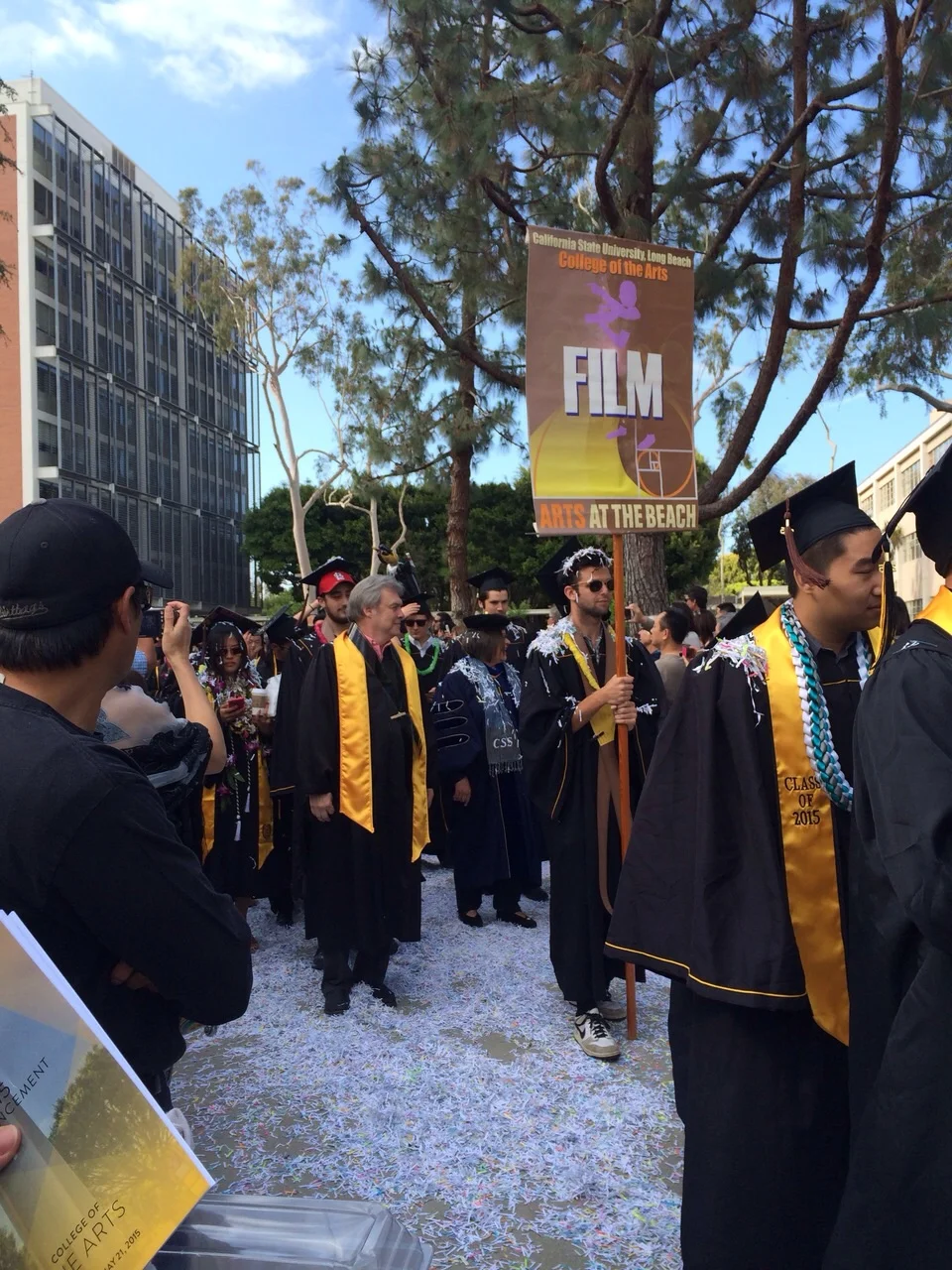
All you need to remember about this place is that you have to get out of your way to make things happen for you. No one is looking to find the next big thing here, but if you show yourself there will be support, great support.
There are other types of departments that's not mentioned here. The TV Department actually allows you to work in professional Commercial spots. While I was there I produced a TedX Conference video (9 speaker videos total).
People can help you with a lot of different things. Some Professors here are actual professionals with really interesting backgrounds. The regular "professor teaches because can't find work" does not completely apply here.
Being close to LA is a plus, and LB scene is pretty good too. I was renting an apartment in Downtown Los Angeles when I was studying there.
If you work hard while there, you will easily find a job there. In fact, I found one.
It's a very positive school, but don't expect a USC treatment. It's a fact that you have to have some money in this business, even while studying it. CSU system is second to the UC system. But again you get what you pay for. Keeping that in mind, and you think about saving money for your Masters Degree, you will find that CSULB has enough reputation to get you in anywhere else you might think of post graduation.
I am proud to have chosen this film school.
2 members found this helpful.
Last edited by a moderator:

Reviewed by:
Alumni
Degree: BA/BS/BFA
Degree: BA/BS/BFA
Pros
- professors, practical filmmaking, small classes
Cons
- location, no bachelors degree
CFS is an awesome school to attend to really learn practical filmmaking. Their professors are amazing, and have a ton of previous filmmaking experience. The courses are highly informative, and more than that very hands on, which allows you to develop the necessary technical knowledge base for making films (not just the history and theory, though they also teach that of course).
Unfortunately, they don't currently offer a bachelors degree, only certification or an associates. However, that could be seen as a plus, because with its location in Colorado you'll be moving anyway to really pursue a career in film.
At the end of the day, a great basis for anyone wanting to go into the industry. My suggestion - don't pass this program up, because you'll get so much personalized attention from great teachers that will really give you a step up when you transfer to a four-year program. Do your time, listen and learn, and you won't regret spending time here first.
Unfortunately, they don't currently offer a bachelors degree, only certification or an associates. However, that could be seen as a plus, because with its location in Colorado you'll be moving anyway to really pursue a career in film.
At the end of the day, a great basis for anyone wanting to go into the industry. My suggestion - don't pass this program up, because you'll get so much personalized attention from great teachers that will really give you a step up when you transfer to a four-year program. Do your time, listen and learn, and you won't regret spending time here first.
One member found this helpful.
Last edited by a moderator:
- www
- 5.00 star(s)
Reviewed by:
Alumni
Pros
- Thoroughly boutique experience with teachers who genuinely care that you are learning and succeeding
Cons
- One month is too short!
I attended the 2015 summer film making program and came out with a fantastic short film, way better than I ever imagined possible as a complete beginner and after just one month. I credit the wonderful teachers who were super efficient in condensing all the important basics into efficient classes and the founders who were always available and invested in our learning process.
I went into the course only hoping to learn to write better, yet when I came out I found the confidence to pursue film as a career. The course is very intensive but well structured so as long as you work hard and plan well, it is possible to make a really good short film. Film professionals tell me they are really impressed with the quality of what I was able to make in such a short time.
The advantage of this school over the other usually bigger schools is that you get very personal attention and tailored experience. I have been through big universities and felt totally lost. I feel much better guided and supported in this program.
I would recommend students to think of a few short story ideas before the course begins to save time from thinking on the spot. You will need all the time for perfecting your script and planning your shoot.
I went into the course only hoping to learn to write better, yet when I came out I found the confidence to pursue film as a career. The course is very intensive but well structured so as long as you work hard and plan well, it is possible to make a really good short film. Film professionals tell me they are really impressed with the quality of what I was able to make in such a short time.
The advantage of this school over the other usually bigger schools is that you get very personal attention and tailored experience. I have been through big universities and felt totally lost. I feel much better guided and supported in this program.
I would recommend students to think of a few short story ideas before the course begins to save time from thinking on the spot. You will need all the time for perfecting your script and planning your shoot.

Reviewed by:
Alumni
Degree: BA/BS/BFA
Degree: BA/BS/BFA
Pros
- Great education overall
- Good set up if you want to make docs about politics or social issues
- Great faculty support for documentary/political/nature/wildlife filmmaking
- Faculty can be a good resource for finding work/projects
Cons
- Not great for narrative production
- No portfolio requirement, classmates are on different levels
- Grad and undergrad classes are combined
- Your internship/work opportunities are limited in DC (compared to NY or LA)
I came into American University being quite averse to politics and government, and I always wanted to focus entirely on narrative film production. My other choice, NYU, would probably have been a better fit, but AU gave me better financial options and I could knock out a year at AU coming in with AP and community college credits. I finished AU in 3 years with minimal debt.
During my time, I was able to find the resources and crews to make narrative films happen, but it sometimes felt like an uphill battle. By the time I graduated, I warmed to documentary filmmaking and became more politically and socially interested. Most of my classmates, whether in the film department, in SOC or in the whole university seemed extremely passionate about politics, government and social issues. A lot of people in the film department were there because they saw it as a way to make their voice heard within these topics. The doc program, especially the Center for Environmental Filmmaking, is very strong. Combine that with being in the Nation's Capital and you're really in the right place for the right thing. Again, probably not for me. But some folks thrived on it. But you do end up looking for internships and work opportunities in the city that you go to school in, and DC doesn't have a lot going on for your average student.
The film department felt like a carousel at times. The older professors who were tenured seemed out of touch with the current scene; they had been tenured and working for the university for so long that the indie struggle seemed very much lost on them. Younger, adjunct professors were barely graduated from the same classes they were teaching, and could provide even less perspective. The boast of the film department is a two-time Oscar winner in sound; yet his classes are primarily a vehicle for him to talk about his experiences and his awards. He barely taught the class I took with him and though his anecdotes were amusing and at times insightful, it was certainly not worth more than just the check mark I received for the class.
In the end, I'll leave you with this: you get what you put in. I went to school with some amazingly talented people. Some people did great work while at school, some people did great work after school. Some people are still in DC and some are in NY or LA. Some are elsewhere. The most ambitious people have left DC. No school is a guarantee of success or failure, but if you have a clear idea of what you want to accomplish, then you can really tailor your school experience to your ambitions. And I think that's true for any (film) school experience. Good luck.
During my time, I was able to find the resources and crews to make narrative films happen, but it sometimes felt like an uphill battle. By the time I graduated, I warmed to documentary filmmaking and became more politically and socially interested. Most of my classmates, whether in the film department, in SOC or in the whole university seemed extremely passionate about politics, government and social issues. A lot of people in the film department were there because they saw it as a way to make their voice heard within these topics. The doc program, especially the Center for Environmental Filmmaking, is very strong. Combine that with being in the Nation's Capital and you're really in the right place for the right thing. Again, probably not for me. But some folks thrived on it. But you do end up looking for internships and work opportunities in the city that you go to school in, and DC doesn't have a lot going on for your average student.
The film department felt like a carousel at times. The older professors who were tenured seemed out of touch with the current scene; they had been tenured and working for the university for so long that the indie struggle seemed very much lost on them. Younger, adjunct professors were barely graduated from the same classes they were teaching, and could provide even less perspective. The boast of the film department is a two-time Oscar winner in sound; yet his classes are primarily a vehicle for him to talk about his experiences and his awards. He barely taught the class I took with him and though his anecdotes were amusing and at times insightful, it was certainly not worth more than just the check mark I received for the class.
In the end, I'll leave you with this: you get what you put in. I went to school with some amazingly talented people. Some people did great work while at school, some people did great work after school. Some people are still in DC and some are in NY or LA. Some are elsewhere. The most ambitious people have left DC. No school is a guarantee of success or failure, but if you have a clear idea of what you want to accomplish, then you can really tailor your school experience to your ambitions. And I think that's true for any (film) school experience. Good luck.
One member found this helpful.
Last edited by a moderator:

jn0pe
Thanks for the review! I'm curious- were you in the MA or MFA production program?

- juny3847
- 5.00 star(s)
Reviewed by:
Alumni
Pros
- the faculty truly care and support; coursework in a broad range of film disciplines; access to film equipment and editing lab, and very hands-on; a good foundation in theory as well
Cons
- the schedule is very intense and can feel overwhelming at times -but this is, from the little I know, fitting for the film world
I did the 5 week film intensive offered by the International Film Institute of New York at Sarah Lawrence College in July 2015. It was my first time with, really, doing any formal sort of coursework in film. It was absolutely wonderful! The five weeks are extremely intense and demanding -the work probably averages 7 days a week for 10-11 hours a day. The faculty are incredibly caring and dedicated -they want to see you excel, really appreciate if you show dedication and passion, and are available for help all the time. The program is awesome in putting each student in a container that supports them in creating, from start to finish, a short with the help of the faculty and fellow students.
I would suggest that anyone who has decided to do the program come in with a few ideas and if possible, a first draft of a script. But this may not be necessary. I have difficulty writing outside of a quiet, contemplative atmosphere, and the program is very fast-paced and demanding.
But overall, a really wonderful experience. The courses were great, the access to equipment were great, the teachers were genuinely supportive, real human beings, who work in the industry and appreciate a newcomer's wish to become a filmmaker, and the fellow students were awesome. It was hard work, a lot of learning, and good, good fun!
I would suggest that anyone who has decided to do the program come in with a few ideas and if possible, a first draft of a script. But this may not be necessary. I have difficulty writing outside of a quiet, contemplative atmosphere, and the program is very fast-paced and demanding.
But overall, a really wonderful experience. The courses were great, the access to equipment were great, the teachers were genuinely supportive, real human beings, who work in the industry and appreciate a newcomer's wish to become a filmmaker, and the fellow students were awesome. It was hard work, a lot of learning, and good, good fun!


- IndecisiveElle
- 5.00 star(s)
- Reaction score: 2
Reviewed by:
Alumni
Degree: Certificate
Concentration: Professional Producing
Degree: Certificate
Concentration: Professional Producing
Pros
- Inexpensive, great networking, valuable information, shorter than a full MFA program, shared faculty with MFA program
Cons
- not a degree program, no practical course work (lecture based only)
Please bear in mind this review is specifically for the Professional Producing Program, NOT for a degree-rewarding program.
Professional Programs | UCLA School of TFT
I discovered the PP at UCLA through this forum when I was graduating from undergrad at The University of Michigan. At the time, I was getting my career started in production and Michigan had a tax incentive and I didn't want to miss out on those opportunities while I pursued a full MFA. The PP are only available to students who have completed their undergrad and they are a lecture based, simplified version of their MFA programs. When I attended in 2012, there were three programs; producing, directing, and screenwriting, They have now added others. I attended the Producing Program along with about 25 other students. There is an admissions process which requires transcripts, a statement of purpose and recommendations.
The lecturers were high ranking industry professionals. I cannot go into many details as to who or what was discussed in specifics because they require you not to disseminate the information in the lectures. This is because you are often given information that is proprietary. I can say that their list on their website is truthful and the lecturers were full of information about budgets, pitches, and the whole Hollywood system. You are not allowed to network with the speakers (you cannot ask them for their contact information), but the students often network with each other and many of my class still keep in touch or work together. In 2012, we also had the opportunity to work on a film which was being line produced by the program TA at the time. For some in the class this was their first time on a real film set. It's a great opportunity to learn how a set works from the ground up. The independent film world in particular in LA is very small and this is certainly a way to meet people involved and to gain valuable information.
If you don't get into an MFA program or you simply don't think a master's is for you, this is a great alternative.
From UCLA ...
COURSE TOPICS
The following topics are typically covered in the Professional Program in Producing: Production Preparation, Line Producing, Financing, Development, Story, Pitching, Contracts/Negotiations, Clearance/Copyright, Legal Issues for Independent Projects, Television Development, Feature Film Marketing, Television Marketing, Alternative Programming, Theatrical Distribution (Domestic and International), Budgeting, The Television Executive, Alternative Distribution, Producing/Directing for TV, Documentary, Post-Production, Producing for Video Games, Producing for Digital Media (Studio and Indie), Multiplatform Storytelling, Virtual Reality.
COURSE WORK & MATERIALS
At this time there are no required materials for this course. In the event that course materials are needed, they will be supplied by UCLA.
Professional Programs | UCLA School of TFT
I discovered the PP at UCLA through this forum when I was graduating from undergrad at The University of Michigan. At the time, I was getting my career started in production and Michigan had a tax incentive and I didn't want to miss out on those opportunities while I pursued a full MFA. The PP are only available to students who have completed their undergrad and they are a lecture based, simplified version of their MFA programs. When I attended in 2012, there were three programs; producing, directing, and screenwriting, They have now added others. I attended the Producing Program along with about 25 other students. There is an admissions process which requires transcripts, a statement of purpose and recommendations.
The lecturers were high ranking industry professionals. I cannot go into many details as to who or what was discussed in specifics because they require you not to disseminate the information in the lectures. This is because you are often given information that is proprietary. I can say that their list on their website is truthful and the lecturers were full of information about budgets, pitches, and the whole Hollywood system. You are not allowed to network with the speakers (you cannot ask them for their contact information), but the students often network with each other and many of my class still keep in touch or work together. In 2012, we also had the opportunity to work on a film which was being line produced by the program TA at the time. For some in the class this was their first time on a real film set. It's a great opportunity to learn how a set works from the ground up. The independent film world in particular in LA is very small and this is certainly a way to meet people involved and to gain valuable information.
If you don't get into an MFA program or you simply don't think a master's is for you, this is a great alternative.
From UCLA ...
COURSE TOPICS
The following topics are typically covered in the Professional Program in Producing: Production Preparation, Line Producing, Financing, Development, Story, Pitching, Contracts/Negotiations, Clearance/Copyright, Legal Issues for Independent Projects, Television Development, Feature Film Marketing, Television Marketing, Alternative Programming, Theatrical Distribution (Domestic and International), Budgeting, The Television Executive, Alternative Distribution, Producing/Directing for TV, Documentary, Post-Production, Producing for Video Games, Producing for Digital Media (Studio and Indie), Multiplatform Storytelling, Virtual Reality.
COURSE WORK & MATERIALS
At this time there are no required materials for this course. In the event that course materials are needed, they will be supplied by UCLA.
One member found this helpful.
Last edited by a moderator:
Latest Accepted Applications
-
Admitted (Off Waitlist After Interview) NYU Dramatic Writing - 2026
this was a long journey but also my dream...- Film Program & Degree
- NYU Tisch - Dramatic Writing MFA
- Attempts
- First Time Applying
- Submission Date
- Nov 26, 2026
- ladybug
- Views: 142
- Reaction score: 1
- Comments: 1
-
Admitted but Not Attending (After Interview) AFI Cinematography - Fall 2026
Graduated from Northwestern University last...- Film Program & Degree
- AFI - Cinematography
- Attempts
- First Time Applying
- Submission Date
- Dec 1, 2025
- Interview Notification Date
- Jan 14, 2026
- Interview Date
- Jan 20, 2026
- Decision Notification Date
- Mar 16, 2026
- parisiantexan
- Updated:
- Views: 827
- Reaction score: 3
- Comments: 2
-
Attending (Admitted After Interview) NYU Film MFA
Applied to NYU Film MFA with a primary...- Film Program & Degree
- NYU Tisch - Graduate Film MFA
- Attempts
- First Time Applying
- Submission Date
- Dec 1, 2025
- Interview Notification Date
- Feb 4, 2026
- Interview Date
- Feb 23, 2026
- Decision Notification Date
- Mar 13, 2026
- parisiantexan
- Updated:
- Views: 853
- Reaction score: 1
- Comments: 3
-
Attending (Admitted After Interview) Stony Brook MFA FILM - 2026 - Producing track
I haven't been in school for over 10 years, so...- Film Program & Degree
- Stony Brook - MFA in Film Producer Track
- Attempts
- First Time Applying
- Submission Date
- Jan 5, 2026
- Interview Notification Date
- Jan 29, 2026
- Interview Date
- Feb 2, 2026
- Decision Notification Date
- Feb 16, 2026
- Scholarship Notification
- Apr 20, 2026
- Willing to share application materials?
- No / Prefer not to share
- Medeina
- Views: 253
- Reaction score: 1
- Comments: 1
-
Admitted but Not Attending (After Interview) AFI Directing - 2026
Application was pretty straightforward except...- Film Program & Degree
- AFI - Directing
- Attempts
- First Time Applying
- Submission Date
- Dec 1, 2025
- Interview Notification Date
- Jan 15, 2026
- Willing to share application materials?
- Yes (DM me privately)
- rouleau.alexander
- Updated:
- Views: 487
- Reaction score: 1
- Comments: 1
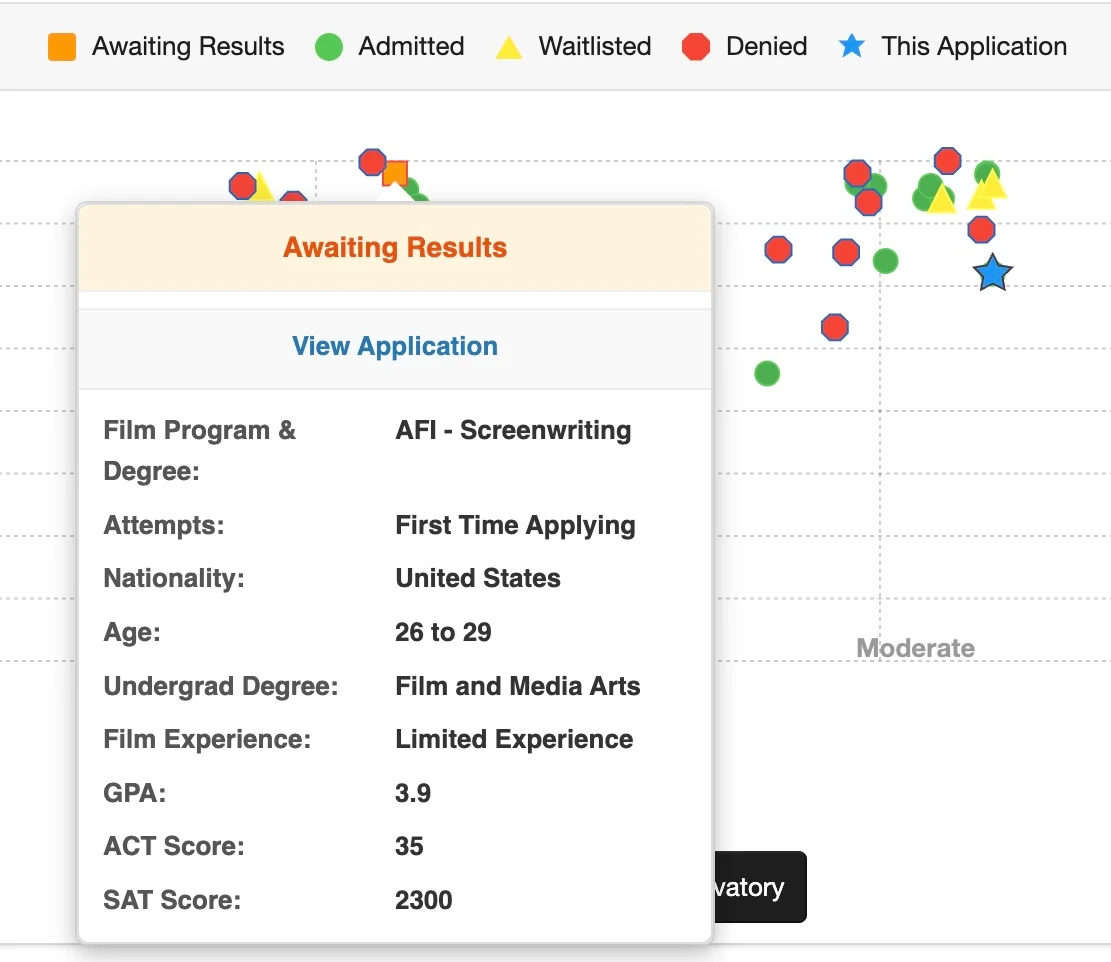
Exclusive Supporting Member Benefits
Peak behind the admissions curtain. Supporting Members unlock full access to insightful data, interviews, and more...
Instant Keyword Alerts
Visible Supporter Badge & Highlighted Profile
Share Subscription with one family member or friend
Instant access • Cancel anytime