France is home to some of the world’s most respected film schools, and few have shaped the country’s audiovisual industry quite like École Supérieure de Réalisation Audiovisuelle (Le Groupe ESRA). Founded in 1972, ESRA has educated generations of directors, cinematographers, producers, editors, sound engineers, and visual effects artists working throughout France and around the world. Today, it is the only private film school in France whose degrees are officially recognized by the French Ministry of Higher Education and Research, and in 2026, Le Figaro Étudiant ranked it the no. 3 film school in France and the country’s top private institution.
ESRA operates on a simple philosophy: before students specialize, they need to understand how every department contributes to telling a story. That interdisciplinary approach has remained at the heart of the film school for over fifty years, even as the industry has evolved through digital filmmaking, streaming platforms, virtual production, and artificial intelligence.
Alexa Pellegrini for FilmSchool.org spoke with Benjamin Azoulay, Vice President of ESRA, about what makes ESRA unique, how its admissions process identifies future filmmakers, what students can expect from the curriculum, and how the film school continues to prepare graduates for an industry that never stops changing.
Azoulay’s connection to ESRA is unusually personal. Having grown up around the school founded by his father, David Azoulay, he has worked there in a variety of roles since his teenage years while also building a career in music production, audiovisual production, and international filmmaking. That combination of institutional history and professional experience gives him a unique perspective on how film education has evolved and where he believes it’s headed next.

Benjamin Azoulay, Vice President of Le Groupe ESRA
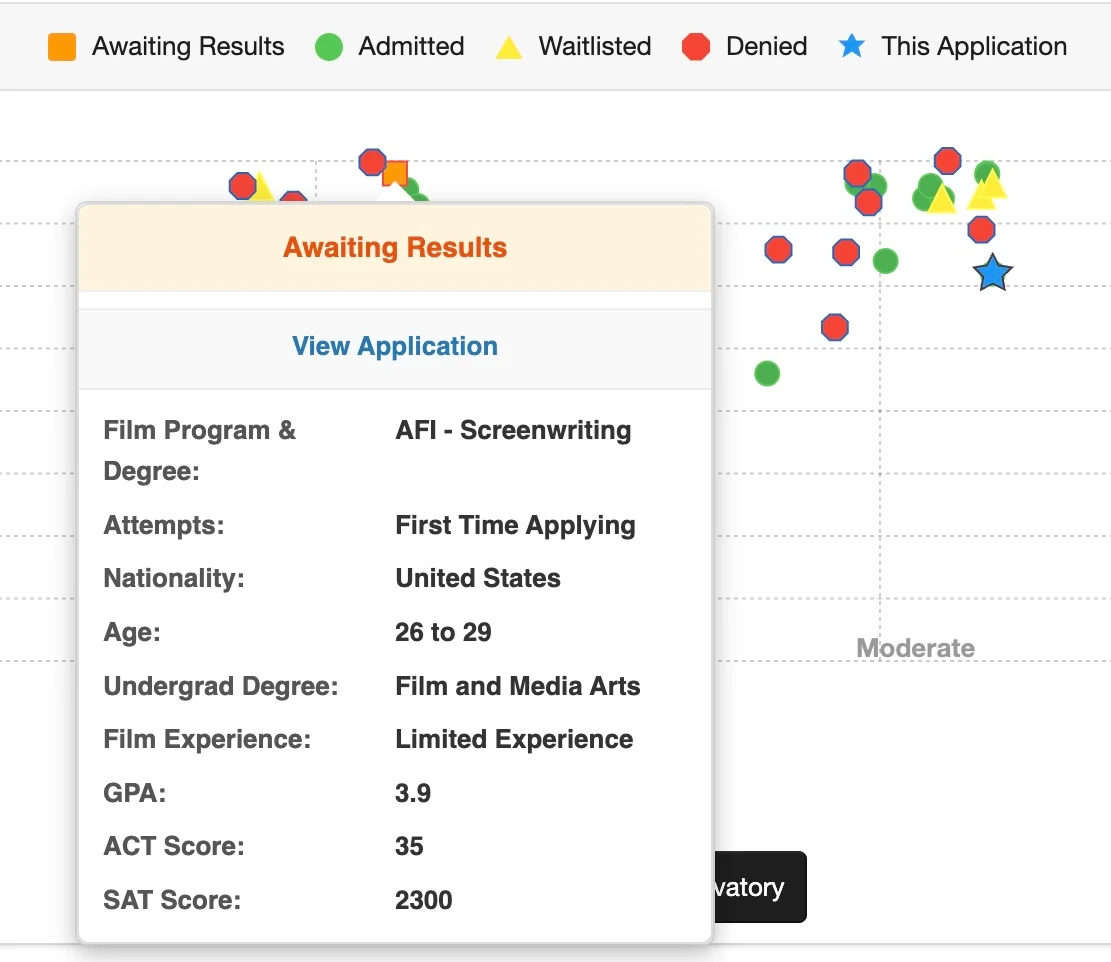
Editor's note: This interview is approximately 18 pages. Part 2 (10 pages) explores the nuances of ESRA's film program to help you apply with confidence, from how ESRA designs cohorts to how the admissions panels reach their final decisions. It is available exclusively to Supporting Members, without whom in-depth articles and interviews like this one would not be possible, as FilmSchool.org is 100% advertisement-free. Supporting Members also enjoy access to our Application Database that tracks upwards of 5,000 film school applications and the full Acceptance Data statistics for each film program that helps demystify common questions about how to construct a winning portfolio, ideal GPAs and GRE scores, and much more.
Benjamin Azoulay: One of the things that makes ESRA unique is that it is the only private film school in France whose degrees are officially recognized by the French Ministry of Higher Education and Research. That recognition reflects our long-standing commitment to combining rigorous academic standards with professional training.
What truly distinguishes ESRA, however, is its educational philosophy. For more than five decades, the school has built its curriculum around a simple idea: the best filmmakers understand not only their own craft, but also the work of every department involved in bringing a story to the screen. That’s why, during the first two years, every student studies the major filmmaking disciplines before choosing a specialization. Whether they become directors, producers, cinematographers, editors, sound engineers, or VFX artists, they first develop a shared understanding of the entire filmmaking process.
We believe that this approach produces stronger professionals. A producer who understands the realities of cinematography makes better production decisions. A director who appreciates the challenges of sound or post-production communicates more effectively with the entire crew. Whatever path our graduates choose, they leave with a common language and a genuine understanding of collaborative filmmaking.
That philosophy also prepares students for an industry that is constantly evolving. Many of the jobs our graduates hold today didn’t exist when they first enrolled. Technologies, platforms, and formats will continue to change, but the fundamentals of visual storytelling, creative problem-solving, and collaboration remain constant. Rather than train students for today’s jobs alone, we aim to give them the skills to adapt throughout their careers.
BA: I think the biggest surprise is that ESRA doesn’t feel like a traditional university. Very quickly, it starts to feel more like a professional creative community.
Because our Filmmaking, Sound Engineering, and 3D Animation students share the same campuses, collaborations happen naturally well beyond scheduled classes. It’s common to see students looking for a cinematographer, a sound designer, an editor, a VFX artist, or a composer for a personal project. Productions continue into the evenings and on weekends, equipment is constantly being checked out, and the school remains active long after classes have finished.
Another thing that surprises many students is how approachable our faculty are. Most of our instructors are active industry professionals who genuinely enjoy mentoring the next generation. It’s very common for students to stay after class to discuss a screenplay, get feedback on a personal project, ask for career advice, or simply continue a conversation that started during the lesson. Those informal exchanges often become just as valuable as the class itself.
Students are also often surprised by the level of responsibility they’re given. Faculty don’t organize productions for them — they’re expected to build their own crews, solve problems, manage equipment, work with actors, and deliver projects together. That level of autonomy can be challenging at first, but it’s one of the reasons our graduates adapt so quickly to professional productions.
The only surprise that isn’t always welcome comes during the first semester. Many students arrive expecting to pick up a camera on day one and immediately start shooting narrative films. Instead, we deliberately begin with exercises that develop storytelling, visual language, editing, and collaboration before introducing the full complexity of filmmaking. Most students understand the reasoning once they complete their first projects and see how much more prepared they are for the productions that follow.
BA: ESRA currently offers three undergraduate degree programs: Filmmaking, Sound Engineering, and 3D Animation.
In Filmmaking and Sound Engineering, students spend their first two years building a broad foundation before specializing in their third year.
Sound Engineering specializations include:
Our approach to 3D Animation has evolved alongside the industry. Rather than asking students to specialize too early, we now train them as versatile CG artists. While they naturally take on different roles during productions, today’s animation studios increasingly value graduates who understand the entire production pipeline and can contribute across disciplines.
After completing their bachelor’s degree, students can continue into our master’s programs in Directing & Screenwriting or Production & Distribution, where they develop more ambitious creative projects while working to professional standards.
One of ESRA’s strengths is that these disciplines are never taught in isolation. Filmmaking, Sound, and 3D Animation students collaborate on productions throughout their studies, reflecting the way creative projects are developed in the real world. That interdisciplinary experience is a defining feature of our educational model.
We continually review our programs to ensure they reflect changes in the industry. Our goal is not to add specializations for the sake of expanding our catalog, but to respond thoughtfully to evolving professional needs. As part of that process, we are currently aiming to launch a Master’s program in CGI & VFX in 2027, subject to final approval.
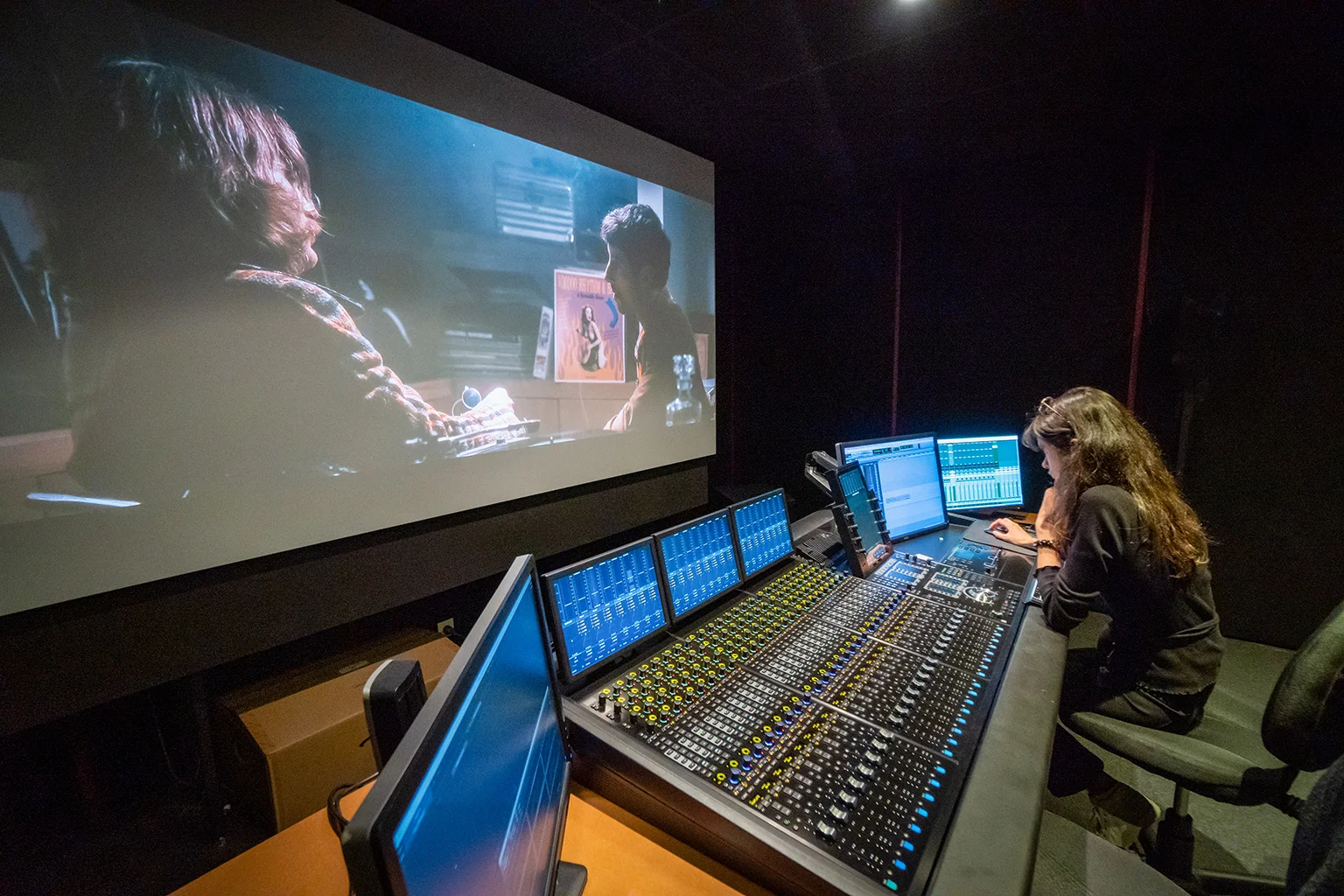
ESRA is highly regarded for its advanced Sound Engineering program. (Courtesy: Benjamin Azoulay)
BA: Our flagship program is undoubtedly the Bachelor in Filmmaking. Established in 1972, it is the program on which ESRA built its reputation and remains our most recognized and competitive degree. It has produced generations of professionals working across the French and international film industries. Its alumni include Academy Award-winning producer Yves Darondeau, as well as Carine Tardieu, whose film “The Ties That Bind (L’Attachement)” won the 2026 César Awards for Best Film and Best Adapted Screenplay. Darondeau is also the Academy Award-winning producer of “March of the Penguins.” Seeing our graduates achieve that level of recognition is a source of great pride for the entire school.
Our English-language programs have also grown significantly in recent years. The English-language Bachelor in Filmmaking, launched in 2018 and taught in both Paris and Cannes, has attracted students from around the world.
Building on that success, we recently introduced the English-language Master’s in Directing and Screenwriting; it has quickly become one of our most sought-after international programs. We redesigned it in collaboration with its academic coordinator, Lionel Steketee, an acclaimed first assistant director and feature film director, to create a highly selective program that combines intensive practical training with close industry engagement. Graduate students also tend to arrive with greater maturity and a clearer sense of their artistic direction, creating an exceptionally dynamic learning environment.
While our historic French-language bachelor’s remains ESRA’s flagship program, the rapid growth of our English-language degrees reflects the increasing international reach of both the school and the film industry itself.
BA: Our English-language and French-language programs follow the same curriculum, award the same officially recognized degrees, and progress in parallel. Students receive the same hands-on training, complete the same productions, and are held to the same academic and professional standards.
The main difference is in the cultural perspective of certain courses, particularly Film History and Film Analysis. Because our international cohorts bring together students from many different countries, these classes draw from a broader range of cinematic traditions, including Asian, African, Eastern European, and Latin American cinema, alongside American, British, French, and other major film movements. This creates discussions that reflect the diversity of the classroom while giving students a more global understanding of film history.
The practical structure of the program is identical. Each semester combines theoretical courses and technical workshops that culminate in a production project. As students progress through the program, those productions become increasingly ambitious and technically demanding, with each stage of the curriculum introducing the skills needed for the next project. By the final year, students work in multidisciplinary production teams using the same professional workflows and equipment found in the industry, including the ARRI Alexa 35.
The master’s follows the same educational philosophy and the same productions as the second and third year of the bachelor’s, but students are expected to work at a more advanced level of creative, technical, and production complexity, reflecting the experience they bring to the program.
BA: ESRA’s Film Bachelor has produced graduates who have gone on to successful careers across virtually every area of the film and audiovisual industries, both in France and internationally. Among our best-known alumni are Pierre Morel, director of “Taken;” Jean-François Richet, director of “Mutiny,” starring Jason Statham; Florent-Emilio Siri, director of “Hostage,” starring Bruce Willis and Kevin Pollak; and Romain Lacourbas, Director of Photography on “From the World of John Wick: Ballerina.”
Other alumni have also built remarkable careers behind the scenes and in industry leadership, including Nicolas Atlan, President of Gaumont US in Los Angeles; Maxime Morin, Grammy Award-winning sound engineer and founder of Donut Studios in Brooklyn; Raphaël Ajuelos, founder of the visual effects studio Concrete Form in Los Angeles; and Thibaut Gauriau, Lead VFX Artist at Lucasfilm.
BA: Class size at ESRA depends on the type of teaching, because filmmaking is learned in many different ways.
Lectures are typically delivered to groups of around 40 students, while larger theoretical lectures and guest seminars may bring together as many as 200 students.
Practical teaching takes place in much smaller groups. Equipment workshops generally include around seven students, ensuring that everyone has substantial hands-on experience. Software classes are limited by the number of workstations, with one computer per student.
Production work is even more personalized. Student film shoots are typically supervised by two faculty members for groups of 10 to 20 students, allowing for close mentoring throughout the production process.
Across all of our programs, more than 400 working industry professionals teach at ESRA’s Paris campus each year alongside our permanent faculty. That means students benefit from a combination of academic continuity and regular interaction with directors, producers, cinematographers, sound engineers, editors, VFX artists, and other professionals who are actively working in the industry.
![ESRA-05[35].webp](https://www.filmschool.org/attachments/esra-05-35-webp.5223/ "ESRA-05[35].webp")
Professors support ESRA students while giving them the freedom to experiment on-set. (Courtesy: Benjamin Azoulay)
BA: My background in music technology, including becoming ESRA’s first Ableton trainer, reinforced something that has always been central to ESRA’s educational approach: sound is an essential part of storytelling.
As sound production became increasingly specialized, ESRA expanded its programs by creating a dedicated Sound Engineering school in the early 1990s. Today, our Filmmaking, Sound Engineering, and 3D Animation undergraduate programs follow distinct curricula while collaborating on productions throughout their studies, reflecting the way films are made professionally.
One of ESRA’s longstanding principles is that a film school benefits enormously from having a dedicated sound program. We place a strong emphasis on sound because it is fundamental to the audience’s experience. A beautifully shot film can quickly lose its impact if the sound is poor. That’s why Film students work with Sound students on productions from their first-year projects onward, allowing both groups to develop the expertise, communication, and teamwork skills that professional productions require. Another important aspect of our approach is that students don’t specialize too early. During their first two years, Sound students are introduced to the full spectrum of professional audio, including music production, production sound, post-production, sound design, radio, live sound, analog and digital recording, and immersive audio. They choose a specialization only in their final undergraduate year, after discovering where their interests and strengths are best suited.
By exposing students to different career paths before they specialize, we prepare graduates who are adaptable, professionally versatile, and ready to enter the industry immediately after graduation. Today, approximately 85% of our graduates are working in the field they studied within one year of completing their degree.
BA: It’s the combination of several factors that ESRA has refined over more than five decades.
First, our campuses are located close to the industries they serve. Whether in Paris, Nice, Rennes, Brussels, or New York, students study in environments where film, television, audiovisual production, and creative companies are active. In Paris, for example, our campus is located near many of France’s major television broadcasters and media organizations, making it easier for students to secure internships and build professional connections.
Second, our teaching model combines academic foundations with intensive professional practice. Theoretical courses are taught primarily by academics and researchers, who provide students with the broader cultural, historical, and analytical perspective needed to understand their craft. Practical workshops, which represent approximately half of the teaching hours in every program, are led by working industry professionals who bring current production methods, real-world expectations, and the latest workflows into the classroom. Those professionals also play an important role in students’ transition into the industry. They often identify promising talent during workshops and productions, creating relationships that continue after graduation.
Finally, we continuously invest in facilities and equipment that reflect current industry standards. Students train on the same types of cameras, sound systems, editing suites, and production tools they will encounter professionally. We no longer shoot on tape because today’s filmmakers work almost exclusively with digital cameras, and our responsibility is to prepare students for the environment they’ll enter after graduation.
In several disciplines, students can also earn industry-recognized certifications, including ARRI certification for our cinematography students, giving them both practical experience and credentials that employers value.
BA: Many students enter the Sound Engineering program with the ambition of working in music, and we encourage that ambition. At the same time, we want them to discover the full range of opportunities available in professional audio. The industry extends far beyond music recording to include film, television, streaming, animation, video games, podcasts, live events, immersive media, and post-production.
France also has one of the world’s leading dubbing industries, creating additional opportunities for skilled sound professionals. By exposing students to these different career paths, many discover fields they hadn’t previously considered but become just as passionate about.
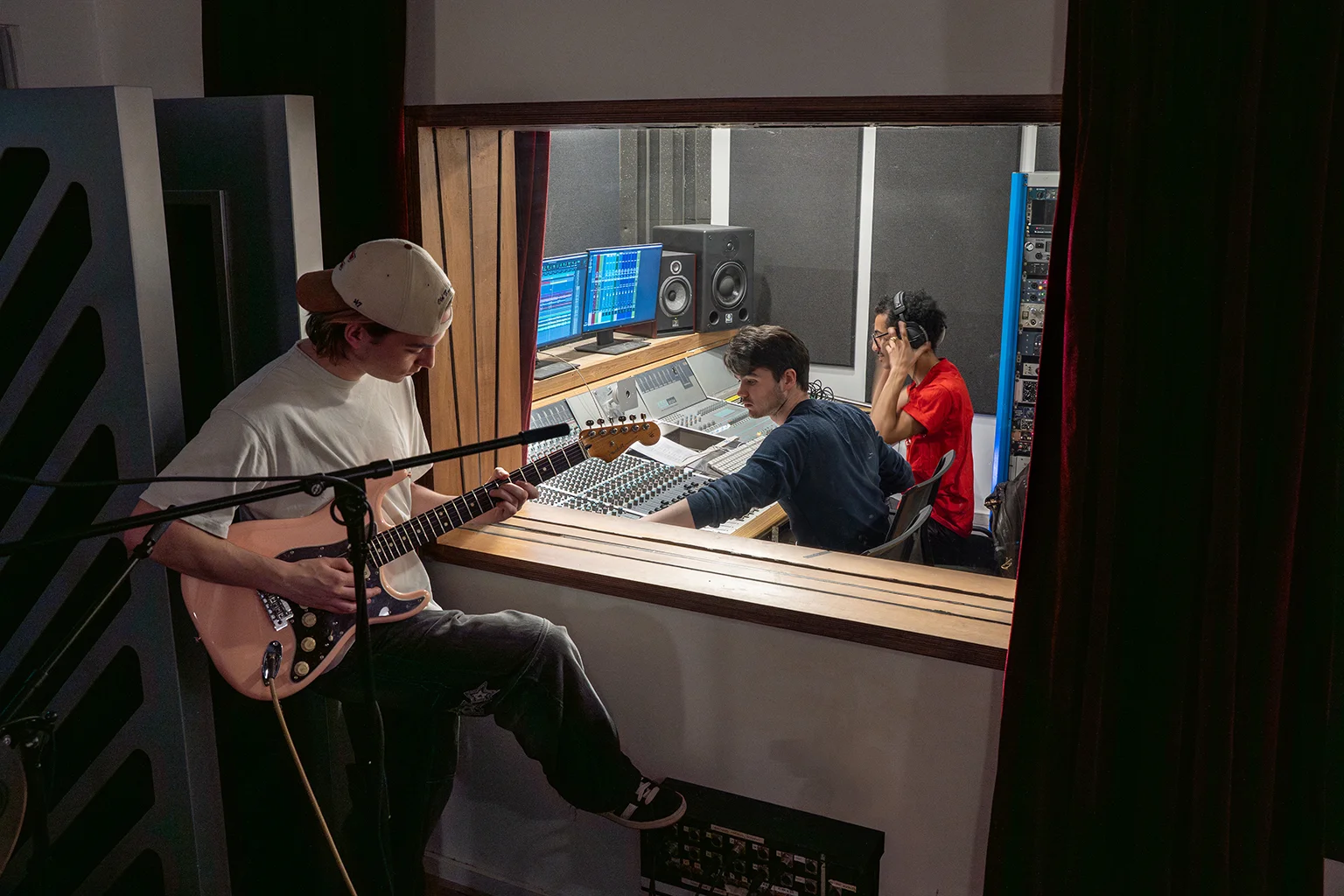
ESRA students have access to industry-grade recording studios. (Courtesy: Benjamin Azoulay)
BA: What makes ESRA unique is that our campuses don’t feel like traditional schools — they feel like creative studios where students come to make films, record music, and develop projects together.
Our facilities remain open until 10 p.m. every day, giving students the flexibility to continue working long after classes have ended. They can also borrow professional equipment at no additional cost, from entry-level cameras and microphones to ARRI Alexa 35 cameras, Dolby Atmos mixing studios, professional recording studios, television sets, and fully equipped sound stages.
Finally, every campus offers its own creative ecosystem. Whether in Paris, Nice, Rennes, Brussels, or New York, students are surrounded by active creative communities, cultural institutions, festivals, and production activity. Beyond providing inspiring places to film and record, these environments create countless opportunities to meet collaborators and begin building the professional networks that will support their careers.
BA: Across all of our programs, we typically receive between two and three applications per available place. Rather than applying rigid admission quotas, however, our objective is to identify talented applicants with the potential to succeed at ESRA. If an admissions cycle produces an exceptional group of candidates, we’re prepared to increase capacity rather than decline qualified students simply to meet a predetermined number.
Our entrance examination is designed to assess potential rather than prior experience. (This is especially important for our bachelor’s programs, where no previous filmmaking background is required. We’re looking for creativity, motivation, curiosity, and the ability to grow within our collaborative environment.) Once admitted, approximately 80% of successful applicants choose to enroll, reflecting the confidence they place in both our admissions process and the education we provide.
The exception is our flagship French Bachelor’s in Filmmaking in Paris. About twelve years ago, we voluntarily capped each incoming class at 250 students to preserve the quality of the educational experience. Since then, the program has become our most competitive degree, receiving around 900 applications each year.
BA: Our admissions process is designed to identify potential rather than prior experience. I was personally involved in admissions for many years, particularly for our international programs, and one thing became very clear: there is no single profile of a successful film student.
The process begins with a motivation letter. More than anything else, we want applicants to explain why they want to study at ESRA, why they have chosen France, and what has inspired their interest in filmmaking or the audiovisual arts. This is often where candidates make their biggest mistakes by trying to write what they think we want to hear rather than presenting an honest picture of themselves.
We’re not looking for applicants who have already directed films, written screenplays, or mastered film history. A future producer, editor, cinematographer, sound engineer, or director may all have very different personalities and experiences, especially at 18 years old. What matters is demonstrating genuine curiosity, creativity, and a clear motivation for pursuing a career in the audiovisual industry.
Authenticity is essential. I sometimes joke that fewer and fewer applicants know Hitchcock today — and when I mention "Star Wars," many immediately think of the recent Disney films rather than the original trilogy. That’s perfectly fine. We don’t expect candidates to know every great filmmaker or pretend to have experiences they don’t have. We’d much rather read a sincere, personal motivation letter than one that tries to impress us with knowledge or accomplishments that aren’t genuine.
The most important part of the admissions process is the interview, which lasts a little over an hour and takes place in two parts. It’s a conversation that allows us to understand not only what applicants have already done, but also their potential, their motivation, and how they think. Those qualities are often much better indicators of future success than an existing portfolio.
In the second and final part of our ESRA admissions interview, Azoulay explains the cost of attendance, scholarships, on-campus culture and life after graduation, and important nuances to help strengthen your application. To keep reading, become a Supporting Member (on sale for a limited time).
To learn more about ESRA, email international@esra.edu and visit the official website.
Whether you're a high school student trying to decide if film school is right for you, or an experienced filmmaker looking for an enriching MFA or MA program, our library of Admissions Interviews can help you narrow down your options and apply more strategically. We've spoken to Columbia University, American Film Institute Conservatory, and other top-ranked film programs worldwide.
Help keep FilmSchool.org 100% ad-free. Articles and interviews like this are made possible by our Supporting Members. By joining, you'll unlock access to exclusive bonus articles, our comprehensive Application Database (Scattergram, GPAs, portfolios, and more), 45 charts that offer a deep dive into Film School Acceptance Statistics, Keyword Alerts to get notified via email, on-site notification, or both when new content is posted using words you're tracking, and other outstanding features.
ESRA operates on a simple philosophy: before students specialize, they need to understand how every department contributes to telling a story. That interdisciplinary approach has remained at the heart of the film school for over fifty years, even as the industry has evolved through digital filmmaking, streaming platforms, virtual production, and artificial intelligence.
Alexa Pellegrini for FilmSchool.org spoke with Benjamin Azoulay, Vice President of ESRA, about what makes ESRA unique, how its admissions process identifies future filmmakers, what students can expect from the curriculum, and how the film school continues to prepare graduates for an industry that never stops changing.
Azoulay’s connection to ESRA is unusually personal. Having grown up around the school founded by his father, David Azoulay, he has worked there in a variety of roles since his teenage years while also building a career in music production, audiovisual production, and international filmmaking. That combination of institutional history and professional experience gives him a unique perspective on how film education has evolved and where he believes it’s headed next.
Benjamin Azoulay, Vice President of Le Groupe ESRA
Editor's note: This interview is approximately 18 pages. Part 2 (10 pages) explores the nuances of ESRA's film program to help you apply with confidence, from how ESRA designs cohorts to how the admissions panels reach their final decisions. It is available exclusively to Supporting Members, without whom in-depth articles and interviews like this one would not be possible, as FilmSchool.org is 100% advertisement-free. Supporting Members also enjoy access to our Application Database that tracks upwards of 5,000 film school applications and the full Acceptance Data statistics for each film program that helps demystify common questions about how to construct a winning portfolio, ideal GPAs and GRE scores, and much more.
Q: What makes ESRA distinct from other film schools in France?
Benjamin Azoulay: One of the things that makes ESRA unique is that it is the only private film school in France whose degrees are officially recognized by the French Ministry of Higher Education and Research. That recognition reflects our long-standing commitment to combining rigorous academic standards with professional training.
What truly distinguishes ESRA, however, is its educational philosophy. For more than five decades, the school has built its curriculum around a simple idea: the best filmmakers understand not only their own craft, but also the work of every department involved in bringing a story to the screen. That’s why, during the first two years, every student studies the major filmmaking disciplines before choosing a specialization. Whether they become directors, producers, cinematographers, editors, sound engineers, or VFX artists, they first develop a shared understanding of the entire filmmaking process.
We believe that this approach produces stronger professionals. A producer who understands the realities of cinematography makes better production decisions. A director who appreciates the challenges of sound or post-production communicates more effectively with the entire crew. Whatever path our graduates choose, they leave with a common language and a genuine understanding of collaborative filmmaking.
That philosophy also prepares students for an industry that is constantly evolving. Many of the jobs our graduates hold today didn’t exist when they first enrolled. Technologies, platforms, and formats will continue to change, but the fundamentals of visual storytelling, creative problem-solving, and collaboration remain constant. Rather than train students for today’s jobs alone, we aim to give them the skills to adapt throughout their careers.
Q: What might not be obvious about ESRA that people should know before they apply?
BA: I think the biggest surprise is that ESRA doesn’t feel like a traditional university. Very quickly, it starts to feel more like a professional creative community.
Because our Filmmaking, Sound Engineering, and 3D Animation students share the same campuses, collaborations happen naturally well beyond scheduled classes. It’s common to see students looking for a cinematographer, a sound designer, an editor, a VFX artist, or a composer for a personal project. Productions continue into the evenings and on weekends, equipment is constantly being checked out, and the school remains active long after classes have finished.
Another thing that surprises many students is how approachable our faculty are. Most of our instructors are active industry professionals who genuinely enjoy mentoring the next generation. It’s very common for students to stay after class to discuss a screenplay, get feedback on a personal project, ask for career advice, or simply continue a conversation that started during the lesson. Those informal exchanges often become just as valuable as the class itself.
Students are also often surprised by the level of responsibility they’re given. Faculty don’t organize productions for them — they’re expected to build their own crews, solve problems, manage equipment, work with actors, and deliver projects together. That level of autonomy can be challenging at first, but it’s one of the reasons our graduates adapt so quickly to professional productions.
The only surprise that isn’t always welcome comes during the first semester. Many students arrive expecting to pick up a camera on day one and immediately start shooting narrative films. Instead, we deliberately begin with exercises that develop storytelling, visual language, editing, and collaboration before introducing the full complexity of filmmaking. Most students understand the reasoning once they complete their first projects and see how much more prepared they are for the productions that follow.
Q: How many degrees and specializations does ESRA currently offer?
BA: ESRA currently offers three undergraduate degree programs: Filmmaking, Sound Engineering, and 3D Animation.
In Filmmaking and Sound Engineering, students spend their first two years building a broad foundation before specializing in their third year.
- Filmmaking specializations include:
- Directing for Film
- Directing for Series
- Television Directing (Broadcast)
- Cinematography
- Production
- Post-Production & Visual Effects
Sound Engineering specializations include:
- Music Direction
- Music Recording
- Audiovisual Sound for Film
- Sound Design for Video Games
- Live Sound
- Radio
Our approach to 3D Animation has evolved alongside the industry. Rather than asking students to specialize too early, we now train them as versatile CG artists. While they naturally take on different roles during productions, today’s animation studios increasingly value graduates who understand the entire production pipeline and can contribute across disciplines.
After completing their bachelor’s degree, students can continue into our master’s programs in Directing & Screenwriting or Production & Distribution, where they develop more ambitious creative projects while working to professional standards.
One of ESRA’s strengths is that these disciplines are never taught in isolation. Filmmaking, Sound, and 3D Animation students collaborate on productions throughout their studies, reflecting the way creative projects are developed in the real world. That interdisciplinary experience is a defining feature of our educational model.
We continually review our programs to ensure they reflect changes in the industry. Our goal is not to add specializations for the sake of expanding our catalog, but to respond thoughtfully to evolving professional needs. As part of that process, we are currently aiming to launch a Master’s program in CGI & VFX in 2027, subject to final approval.
ESRA is highly regarded for its advanced Sound Engineering program. (Courtesy: Benjamin Azoulay)
Q: Which film degree is the most popular or competitive?
BA: Our flagship program is undoubtedly the Bachelor in Filmmaking. Established in 1972, it is the program on which ESRA built its reputation and remains our most recognized and competitive degree. It has produced generations of professionals working across the French and international film industries. Its alumni include Academy Award-winning producer Yves Darondeau, as well as Carine Tardieu, whose film “The Ties That Bind (L’Attachement)” won the 2026 César Awards for Best Film and Best Adapted Screenplay. Darondeau is also the Academy Award-winning producer of “March of the Penguins.” Seeing our graduates achieve that level of recognition is a source of great pride for the entire school.
Our English-language programs have also grown significantly in recent years. The English-language Bachelor in Filmmaking, launched in 2018 and taught in both Paris and Cannes, has attracted students from around the world.
Building on that success, we recently introduced the English-language Master’s in Directing and Screenwriting; it has quickly become one of our most sought-after international programs. We redesigned it in collaboration with its academic coordinator, Lionel Steketee, an acclaimed first assistant director and feature film director, to create a highly selective program that combines intensive practical training with close industry engagement. Graduate students also tend to arrive with greater maturity and a clearer sense of their artistic direction, creating an exceptionally dynamic learning environment.
While our historic French-language bachelor’s remains ESRA’s flagship program, the rapid growth of our English-language degrees reflects the increasing international reach of both the school and the film industry itself.
Q: Does ESRA have different courses or graduation requirements for international students?
BA: Our English-language and French-language programs follow the same curriculum, award the same officially recognized degrees, and progress in parallel. Students receive the same hands-on training, complete the same productions, and are held to the same academic and professional standards.
The main difference is in the cultural perspective of certain courses, particularly Film History and Film Analysis. Because our international cohorts bring together students from many different countries, these classes draw from a broader range of cinematic traditions, including Asian, African, Eastern European, and Latin American cinema, alongside American, British, French, and other major film movements. This creates discussions that reflect the diversity of the classroom while giving students a more global understanding of film history.
The practical structure of the program is identical. Each semester combines theoretical courses and technical workshops that culminate in a production project. As students progress through the program, those productions become increasingly ambitious and technically demanding, with each stage of the curriculum introducing the skills needed for the next project. By the final year, students work in multidisciplinary production teams using the same professional workflows and equipment found in the industry, including the ARRI Alexa 35.
The master’s follows the same educational philosophy and the same productions as the second and third year of the bachelor’s, but students are expected to work at a more advanced level of creative, technical, and production complexity, reflecting the experience they bring to the program.
Q: Who are a few other famous alumni of ESRA’s Bachelor's in Filmmaking?
BA: ESRA’s Film Bachelor has produced graduates who have gone on to successful careers across virtually every area of the film and audiovisual industries, both in France and internationally. Among our best-known alumni are Pierre Morel, director of “Taken;” Jean-François Richet, director of “Mutiny,” starring Jason Statham; Florent-Emilio Siri, director of “Hostage,” starring Bruce Willis and Kevin Pollak; and Romain Lacourbas, Director of Photography on “From the World of John Wick: Ballerina.”
Other alumni have also built remarkable careers behind the scenes and in industry leadership, including Nicolas Atlan, President of Gaumont US in Los Angeles; Maxime Morin, Grammy Award-winning sound engineer and founder of Donut Studios in Brooklyn; Raphaël Ajuelos, founder of the visual effects studio Concrete Form in Los Angeles; and Thibaut Gauriau, Lead VFX Artist at Lucasfilm.
Q: How large are ESRA's classes?
BA: Class size at ESRA depends on the type of teaching, because filmmaking is learned in many different ways.
Lectures are typically delivered to groups of around 40 students, while larger theoretical lectures and guest seminars may bring together as many as 200 students.
Practical teaching takes place in much smaller groups. Equipment workshops generally include around seven students, ensuring that everyone has substantial hands-on experience. Software classes are limited by the number of workstations, with one computer per student.
Production work is even more personalized. Student film shoots are typically supervised by two faculty members for groups of 10 to 20 students, allowing for close mentoring throughout the production process.
Across all of our programs, more than 400 working industry professionals teach at ESRA’s Paris campus each year alongside our permanent faculty. That means students benefit from a combination of academic continuity and regular interaction with directors, producers, cinematographers, sound engineers, editors, VFX artists, and other professionals who are actively working in the industry.
Professors support ESRA students while giving them the freedom to experiment on-set. (Courtesy: Benjamin Azoulay)
Q: As ESRA’s first Ableton trainer, how did your background impact the way music plays into the school’s Sound curriculum?
BA: My background in music technology, including becoming ESRA’s first Ableton trainer, reinforced something that has always been central to ESRA’s educational approach: sound is an essential part of storytelling.
As sound production became increasingly specialized, ESRA expanded its programs by creating a dedicated Sound Engineering school in the early 1990s. Today, our Filmmaking, Sound Engineering, and 3D Animation undergraduate programs follow distinct curricula while collaborating on productions throughout their studies, reflecting the way films are made professionally.
One of ESRA’s longstanding principles is that a film school benefits enormously from having a dedicated sound program. We place a strong emphasis on sound because it is fundamental to the audience’s experience. A beautifully shot film can quickly lose its impact if the sound is poor. That’s why Film students work with Sound students on productions from their first-year projects onward, allowing both groups to develop the expertise, communication, and teamwork skills that professional productions require. Another important aspect of our approach is that students don’t specialize too early. During their first two years, Sound students are introduced to the full spectrum of professional audio, including music production, production sound, post-production, sound design, radio, live sound, analog and digital recording, and immersive audio. They choose a specialization only in their final undergraduate year, after discovering where their interests and strengths are best suited.
By exposing students to different career paths before they specialize, we prepare graduates who are adaptable, professionally versatile, and ready to enter the industry immediately after graduation. Today, approximately 85% of our graduates are working in the field they studied within one year of completing their degree.
Q: How does ESRA manage to keep its graduate job placement rate so high?
BA: It’s the combination of several factors that ESRA has refined over more than five decades.
First, our campuses are located close to the industries they serve. Whether in Paris, Nice, Rennes, Brussels, or New York, students study in environments where film, television, audiovisual production, and creative companies are active. In Paris, for example, our campus is located near many of France’s major television broadcasters and media organizations, making it easier for students to secure internships and build professional connections.
Second, our teaching model combines academic foundations with intensive professional practice. Theoretical courses are taught primarily by academics and researchers, who provide students with the broader cultural, historical, and analytical perspective needed to understand their craft. Practical workshops, which represent approximately half of the teaching hours in every program, are led by working industry professionals who bring current production methods, real-world expectations, and the latest workflows into the classroom. Those professionals also play an important role in students’ transition into the industry. They often identify promising talent during workshops and productions, creating relationships that continue after graduation.
Finally, we continuously invest in facilities and equipment that reflect current industry standards. Students train on the same types of cameras, sound systems, editing suites, and production tools they will encounter professionally. We no longer shoot on tape because today’s filmmakers work almost exclusively with digital cameras, and our responsibility is to prepare students for the environment they’ll enter after graduation.
In several disciplines, students can also earn industry-recognized certifications, including ARRI certification for our cinematography students, giving them both practical experience and credentials that employers value.
Q: What a few common career paths for Sound Engineering graduates?
BA: Many students enter the Sound Engineering program with the ambition of working in music, and we encourage that ambition. At the same time, we want them to discover the full range of opportunities available in professional audio. The industry extends far beyond music recording to include film, television, streaming, animation, video games, podcasts, live events, immersive media, and post-production.
France also has one of the world’s leading dubbing industries, creating additional opportunities for skilled sound professionals. By exposing students to these different career paths, many discover fields they hadn’t previously considered but become just as passionate about.
ESRA students have access to industry-grade recording studios. (Courtesy: Benjamin Azoulay)
Q: What are the unique features of all ESRA’s campuses, in terms of the environment, networking opportunities, and facilities?
BA: What makes ESRA unique is that our campuses don’t feel like traditional schools — they feel like creative studios where students come to make films, record music, and develop projects together.
Our facilities remain open until 10 p.m. every day, giving students the flexibility to continue working long after classes have ended. They can also borrow professional equipment at no additional cost, from entry-level cameras and microphones to ARRI Alexa 35 cameras, Dolby Atmos mixing studios, professional recording studios, television sets, and fully equipped sound stages.
Finally, every campus offers its own creative ecosystem. Whether in Paris, Nice, Rennes, Brussels, or New York, students are surrounded by active creative communities, cultural institutions, festivals, and production activity. Beyond providing inspiring places to film and record, these environments create countless opportunities to meet collaborators and begin building the professional networks that will support their careers.
Q: How many applications do you receive each year?
BA: Across all of our programs, we typically receive between two and three applications per available place. Rather than applying rigid admission quotas, however, our objective is to identify talented applicants with the potential to succeed at ESRA. If an admissions cycle produces an exceptional group of candidates, we’re prepared to increase capacity rather than decline qualified students simply to meet a predetermined number.
Our entrance examination is designed to assess potential rather than prior experience. (This is especially important for our bachelor’s programs, where no previous filmmaking background is required. We’re looking for creativity, motivation, curiosity, and the ability to grow within our collaborative environment.) Once admitted, approximately 80% of successful applicants choose to enroll, reflecting the confidence they place in both our admissions process and the education we provide.
The exception is our flagship French Bachelor’s in Filmmaking in Paris. About twelve years ago, we voluntarily capped each incoming class at 250 students to preserve the quality of the educational experience. Since then, the program has become our most competitive degree, receiving around 900 applications each year.
Q: Could you give us a breakdown of how to apply to ESRA?
BA: Our admissions process is designed to identify potential rather than prior experience. I was personally involved in admissions for many years, particularly for our international programs, and one thing became very clear: there is no single profile of a successful film student.
The process begins with a motivation letter. More than anything else, we want applicants to explain why they want to study at ESRA, why they have chosen France, and what has inspired their interest in filmmaking or the audiovisual arts. This is often where candidates make their biggest mistakes by trying to write what they think we want to hear rather than presenting an honest picture of themselves.
We’re not looking for applicants who have already directed films, written screenplays, or mastered film history. A future producer, editor, cinematographer, sound engineer, or director may all have very different personalities and experiences, especially at 18 years old. What matters is demonstrating genuine curiosity, creativity, and a clear motivation for pursuing a career in the audiovisual industry.
Authenticity is essential. I sometimes joke that fewer and fewer applicants know Hitchcock today — and when I mention "Star Wars," many immediately think of the recent Disney films rather than the original trilogy. That’s perfectly fine. We don’t expect candidates to know every great filmmaker or pretend to have experiences they don’t have. We’d much rather read a sincere, personal motivation letter than one that tries to impress us with knowledge or accomplishments that aren’t genuine.
The most important part of the admissions process is the interview, which lasts a little over an hour and takes place in two parts. It’s a conversation that allows us to understand not only what applicants have already done, but also their potential, their motivation, and how they think. Those qualities are often much better indicators of future success than an existing portfolio.
Thank you for reading! The interview continues in part 2...
In the second and final part of our ESRA admissions interview, Azoulay explains the cost of attendance, scholarships, on-campus culture and life after graduation, and important nuances to help strengthen your application. To keep reading, become a Supporting Member (on sale for a limited time).
To learn more about ESRA, email international@esra.edu and visit the official website.
Whether you're a high school student trying to decide if film school is right for you, or an experienced filmmaker looking for an enriching MFA or MA program, our library of Admissions Interviews can help you narrow down your options and apply more strategically. We've spoken to Columbia University, American Film Institute Conservatory, and other top-ranked film programs worldwide.
Help keep FilmSchool.org 100% ad-free. Articles and interviews like this are made possible by our Supporting Members. By joining, you'll unlock access to exclusive bonus articles, our comprehensive Application Database (Scattergram, GPAs, portfolios, and more), 45 charts that offer a deep dive into Film School Acceptance Statistics, Keyword Alerts to get notified via email, on-site notification, or both when new content is posted using words you're tracking, and other outstanding features.