
Navigation
Install the app
How to install the app on iOS
Follow along with the video below to see how to install our site as a web app on your home screen.
Note: This feature may not be available in some browsers.
More options
-
Supporting Membership Pricing Increasing on May 1 for New Subscriptions
To continue expanding the exclusive tools, producing more in-depth interviews with admissions teams, and keeping FilmSchool.org completely ad-free and unbiased, Supporting Membership prices for new subscriptions will increase starting May 1st.
You are using an out of date browser. It may not display this or other websites correctly.
You should upgrade or use an alternative browser.
You should upgrade or use an alternative browser.
Latest Film School Reviews
Filters
Show only:
Loading…


- panda
- 5.00 star(s)
- Reaction score: 12
Reviewed by:
Alumni
Degree: MA/MFA
Concentration: Writing for Screen & Television
Degree: MA/MFA
Concentration: Writing for Screen & Television
Pros
- faculty faculty faculty
- course flexibility
- incredible TV alumni network
- talented and motivated peers
- industry internship accessibility
- student diversity
Cons
- not totally a con, but self care is important while in any intensive program
- scholarship opportunities exist, but expect to have student loans
I completed USC's MFA screenwriting program in 2018. I'm beyond happy with the education and mentorship I received. Within two months of graduating, I landed my first industry job as a showrunner's assistant on a Netflix drama series. Most of my peers (a total of 32 in my year) are currently employed – a handful in development, a few with features or TV pilots optioned, multiple TV staff writers (yes: multiple, right out of the gate), and a good number of assistants in TV writers' rooms (for shows on Netflix, the CW, CBS, ABC, and more). This follows in the footsteps of the year above mine.
These friendships are what I value most from my time at USC – we're reading scripts and giving notes in writers' groups, we're meeting up frequently for drinks and events, and we're landing each other interviews, connections, and jobs. Working in LA is never easy, but goals feel so much more attainable when surrounded by talented people striving for the same thing. Having intelligent friends who are eager to vouch on your behalf is a further reassurance.
The classes themselves were challenging and rewarding. I pursued a TV thesis track, but I'd say my classmates were split nearly 50-50 between TV thesis and feature thesis. We were forced to write many pages very quickly, and doing so was a crash course on how to generate content and develop a routine. USC allows for some course flexibility – I took a few production classes and was accepted into a size-capped mock writers' room class. The class developed and wrote a four-episode web series, which was produced, filmed, and edited by a companion production department course. We were able to build a large set on one of USC's sound stages, too, so we obtained solid set experience.
Peers of mine took courses on gaming, podcasts, idea pitching, editing, film analysis, directing comedy, interactive media... choral music... so while many courses in the track are solidified for you (for good reason), there is ample room to still forge your own path through the program. The curriculum also includes a business class your second year (covers management, agencies, entertainment lawyers, contracts, IP, fellowship applications...). Frequent lectures by successful screenwriters and producers were also helpful, most of which were only available for MFA screenwriters to attend (i.e., plenty of face time to ask questions and pick brains). Professors also invited working writer-friends to visit classes throughout each semester (and, while at public events asking for contact info is a HUGE no-no, these individuals often wanted to pass along their email addresses to connect further).
While some drawbacks to the program can include cost (there are great scholarship opportunities, but many students ended up without significant aid... the up-side is that the program's only two years), I would choose this program again in a heartbeat. As with any program, your enjoyment of any given class is dependent on other students and on whether you vibe with a professor. Professor diversity is also important to me, so I was personally happy to have an LGBT-identifying professor my first semester. Strides have been taken in recent years to increase diversity among professors even further, I believe. My classmates were an incredibly diverse group, too, which was one of the program's highlights for me.
Final note: the amount of MFA alumni who are working in TV is actually insane. The TV program at USC is pretty innovative (spec courses, pilot courses, pilot re-write courses, structure courses), and everyone in my class who graduated in pursuit of a TV writing career felt very prepared. The program also gave us face-to-face access to successful alumni or other mentors through various end-of-program events (some of which aren't even publicized on USC's website).
I would say my fingers hurt after writing such a lengthy review, but THEY DON'T. Thanks, USC, for preparing me for this moment.
These friendships are what I value most from my time at USC – we're reading scripts and giving notes in writers' groups, we're meeting up frequently for drinks and events, and we're landing each other interviews, connections, and jobs. Working in LA is never easy, but goals feel so much more attainable when surrounded by talented people striving for the same thing. Having intelligent friends who are eager to vouch on your behalf is a further reassurance.
The classes themselves were challenging and rewarding. I pursued a TV thesis track, but I'd say my classmates were split nearly 50-50 between TV thesis and feature thesis. We were forced to write many pages very quickly, and doing so was a crash course on how to generate content and develop a routine. USC allows for some course flexibility – I took a few production classes and was accepted into a size-capped mock writers' room class. The class developed and wrote a four-episode web series, which was produced, filmed, and edited by a companion production department course. We were able to build a large set on one of USC's sound stages, too, so we obtained solid set experience.
Peers of mine took courses on gaming, podcasts, idea pitching, editing, film analysis, directing comedy, interactive media... choral music... so while many courses in the track are solidified for you (for good reason), there is ample room to still forge your own path through the program. The curriculum also includes a business class your second year (covers management, agencies, entertainment lawyers, contracts, IP, fellowship applications...). Frequent lectures by successful screenwriters and producers were also helpful, most of which were only available for MFA screenwriters to attend (i.e., plenty of face time to ask questions and pick brains). Professors also invited working writer-friends to visit classes throughout each semester (and, while at public events asking for contact info is a HUGE no-no, these individuals often wanted to pass along their email addresses to connect further).
While some drawbacks to the program can include cost (there are great scholarship opportunities, but many students ended up without significant aid... the up-side is that the program's only two years), I would choose this program again in a heartbeat. As with any program, your enjoyment of any given class is dependent on other students and on whether you vibe with a professor. Professor diversity is also important to me, so I was personally happy to have an LGBT-identifying professor my first semester. Strides have been taken in recent years to increase diversity among professors even further, I believe. My classmates were an incredibly diverse group, too, which was one of the program's highlights for me.
Final note: the amount of MFA alumni who are working in TV is actually insane. The TV program at USC is pretty innovative (spec courses, pilot courses, pilot re-write courses, structure courses), and everyone in my class who graduated in pursuit of a TV writing career felt very prepared. The program also gave us face-to-face access to successful alumni or other mentors through various end-of-program events (some of which aren't even publicized on USC's website).
I would say my fingers hurt after writing such a lengthy review, but THEY DON'T. Thanks, USC, for preparing me for this moment.
- Alumni Network
- 5.00 star(s)
- Campus
- 5.00 star(s)
- Career Assistance
- 5.00 star(s)
- Coursework
- 5.00 star(s)
- Facilities & Equipment
- 5.00 star(s)
- Professors
- 5.00 star(s)
- Scholarships
- 3.00 star(s)
4 members found this helpful.
Last edited by a moderator:


View previous replies…
F
faeya
I am elated for you (obv!) but i need help and advice panda-chan!! I'm thinking of applying for mfa screenwriting later on so can i hit you up in the dms for some light convo? or an email is fine too!!

theMorrigan
I think your review just solidifies how much I want to attend USC for this MFA program. Thanks for the in-depth and thorough thoughts!

- Julie Lew
- 5.00 star(s)
- Reaction score: 1
Reviewed by:
Alumni
Degree: Certificate
Concentration: Producing
Degree: Certificate
Concentration: Producing
Pros
- amazing lecturers
- great network
- great community
Cons
- no assignments or film projects
- no financial aid
I loved my time at the UCLA PP in Producing! Each night, a different lecturer from a different part of the industry comes in and gives a talk. If you have just moved to LA and want a thorough understanding of the industry, as well as some connections, this is a great program at a not too steep price (not cheap though!). This program offers some amazing guest lecturers. I got to meet and participate in Q&As with the VP of Current at NBC and an exec at Marvel, among countless others.
One of the lecturers of the program while I attended was a former exec at a network (and Academy Award winner), who became a great mentor to everyone in the class. He took the time to set up individual meetings with all of us so he could learn about who we are and what we wanted from the program. Even now, months after finishing the program, I still email him and ask him for advice.
You're told right away that the most valuable takeaway from the program is the community you build with your fellow students. We hung out regularly, touring movie studios and throwing parties together. We even participated as a team together at the LA 48 Hour Film Festival. I still am close with several people from the program. It's nice to not feel alone as you try to find you way into the industry.
Also, I am currently interning at the production company of one of the lecturers who came and spoke with us. I definitely wouldn't have gotten this opportunity if I hadn't been a student at the UCLA PP.
If you can afford the program (when I went it was $5500 for the ten week course), I highly recommend it!
(I rated the equipment as one star because there is no equipment for the program. It's all lecture based, with no film assignments.)
One of the lecturers of the program while I attended was a former exec at a network (and Academy Award winner), who became a great mentor to everyone in the class. He took the time to set up individual meetings with all of us so he could learn about who we are and what we wanted from the program. Even now, months after finishing the program, I still email him and ask him for advice.
You're told right away that the most valuable takeaway from the program is the community you build with your fellow students. We hung out regularly, touring movie studios and throwing parties together. We even participated as a team together at the LA 48 Hour Film Festival. I still am close with several people from the program. It's nice to not feel alone as you try to find you way into the industry.
Also, I am currently interning at the production company of one of the lecturers who came and spoke with us. I definitely wouldn't have gotten this opportunity if I hadn't been a student at the UCLA PP.
If you can afford the program (when I went it was $5500 for the ten week course), I highly recommend it!
(I rated the equipment as one star because there is no equipment for the program. It's all lecture based, with no film assignments.)
- Alumni Network
- 4.00 star(s)
- Campus
- 5.00 star(s)
- Career Assistance
- 3.00 star(s)
- Coursework
- 5.00 star(s)
- Facilities & Equipment
- 1.00 star(s)
- Professors
- 5.00 star(s)
- Scholarships
- 1.00 star(s)
One member found this helpful.
Last edited by a moderator:

- LeeAnne Lowry
- 5.00 star(s)
- Reaction score: 1
Reviewed by:
Current Student
Degree: MA/MFA
Concentration: TV and Screenwriting
Degree: MA/MFA
Concentration: TV and Screenwriting
Pros
- alumni network
- location
- low residency
- female-centric
- LGBTQ friendly
The Stephens MFA in Screenwriting is a incredible option for people who want a reputable MFA and still be able to hold a full-time job. I chose the MFA program because I wasn't in a position to leave work or move near a school I'd want to attend, but I still wanted to put in the work to get the degree. Through this program I was able to take only 10 days out of each semester to travel to LA for intensive classes, and then the rest of the year I could do my work on weekends and evenings.
The best part of Stephens (in any program) is the alumni network. Stephens alums are known for helping each other, and as a graduate of the undergrad film program I have been in many situations where alums I don't know have helped me out, from finding housing to getting job interviews. As the network continues to expand, this becomes more and more valuable. Not only will you be connected to alums, but your own class is an amazing resource. The people that are selected into the program are top notch, excellent people. You'll meet people you just enjoy being around, and that is so valuable for future working relationships. We all rise together.
The intensive takes place mostly at the Jim Henson studios in Hollywood. First of all, that alone is something to brag to your friends about. The lot contains so much history: from being built by Charlie Chaplin (you'll have lunch where Modern Times was filmed!) to Henson characters around every corner to the still-active Henson Recording Studios. It's the perfect place for classes, screenings, and meeting with mentors.
I only gave the program a few slightly-less-than-perfect scores, and I imagine they are flaws in any school: the professors and coursework can be a little inconsistent. As with any school, you get hard mentors and you get easy mentors. This can make it a little unfair when it comes to GPAs because they grade with different rigor. But, as someone who had one of the more difficult mentors, I can tell you that in the end you benefit from it and become a better writer. As for financial aid, it's pretty average. One great scholarship they do is for women over 55, which goes to show how much they care about their mission of getting under-heard voices into the industry.
The best part of Stephens (in any program) is the alumni network. Stephens alums are known for helping each other, and as a graduate of the undergrad film program I have been in many situations where alums I don't know have helped me out, from finding housing to getting job interviews. As the network continues to expand, this becomes more and more valuable. Not only will you be connected to alums, but your own class is an amazing resource. The people that are selected into the program are top notch, excellent people. You'll meet people you just enjoy being around, and that is so valuable for future working relationships. We all rise together.
The intensive takes place mostly at the Jim Henson studios in Hollywood. First of all, that alone is something to brag to your friends about. The lot contains so much history: from being built by Charlie Chaplin (you'll have lunch where Modern Times was filmed!) to Henson characters around every corner to the still-active Henson Recording Studios. It's the perfect place for classes, screenings, and meeting with mentors.
I only gave the program a few slightly-less-than-perfect scores, and I imagine they are flaws in any school: the professors and coursework can be a little inconsistent. As with any school, you get hard mentors and you get easy mentors. This can make it a little unfair when it comes to GPAs because they grade with different rigor. But, as someone who had one of the more difficult mentors, I can tell you that in the end you benefit from it and become a better writer. As for financial aid, it's pretty average. One great scholarship they do is for women over 55, which goes to show how much they care about their mission of getting under-heard voices into the industry.
Last edited by a moderator:
- Elizabeth Dwyer
- 5.00 star(s)
- Reaction score: 2
Reviewed by:
Alumni
Degree: MA/MFA
Concentration: TV and Screenwriting
Degree: MA/MFA
Concentration: TV and Screenwriting
As a member of the inaugural cohort, I was blown away by how incredible and influential this program is. It was phenomenal to spend two years of my life among such brilliant, hardworking, dedicated people - from instructors to mentors to fellow classmates. These are lifelong connections and friendships, providing support and encouragement long after graduation. You'd be hard pressed to find a more devoted group of people, chief among them the program's creator, Ken LaZebnik, aka The Nicest Man In Hollywood.
I can honestly say that I am not only a better writer because of the Stephens MFA program, I'm a better person. If you want to be a professional screenwriter, do yourself a favor and apply, Apply, APPLY!
Note: In the Ratings section, Career Assistance is listed as a 4 because of two things:
1. As a relatively new program, they are still working out official opportunities for things like internships, which can be found in a lot of more established writing programs. HOWEVER, the personal support and attention you receive from Stephens is Unparalleled. You will not be lost in a sea of alumni and current students. You will know with all your heart that you and your work Matter, and that your professors and mentors are there to bolster and promote you in every way possible.
2. A lot of this work is up to you. You will have to hustle. And write. And rewrite. And hustle some more. And write until you think your hands will fall off, and then go out and hustle, again. Yes, access and opportunity are essential, but you cannot rely on anyone other than yourself to build a successful career. Fortune favors the prepared, and that preparedness is yours and yours alone.
I can honestly say that I am not only a better writer because of the Stephens MFA program, I'm a better person. If you want to be a professional screenwriter, do yourself a favor and apply, Apply, APPLY!
Note: In the Ratings section, Career Assistance is listed as a 4 because of two things:
1. As a relatively new program, they are still working out official opportunities for things like internships, which can be found in a lot of more established writing programs. HOWEVER, the personal support and attention you receive from Stephens is Unparalleled. You will not be lost in a sea of alumni and current students. You will know with all your heart that you and your work Matter, and that your professors and mentors are there to bolster and promote you in every way possible.
2. A lot of this work is up to you. You will have to hustle. And write. And rewrite. And hustle some more. And write until you think your hands will fall off, and then go out and hustle, again. Yes, access and opportunity are essential, but you cannot rely on anyone other than yourself to build a successful career. Fortune favors the prepared, and that preparedness is yours and yours alone.
Last edited by a moderator:

Reviewed by:
Alumni
Degree: BA/BS/BFA
Degree: BA/BS/BFA
Pros
- Great location and environment
Cons
- Some courses seem a little bit chaotic (not all collaborations are successful)
CCC is a great film school for many reasons: different levels of courses allows you to explore your preference for filmmaking step by step as well as teaching various aspects in film production process, so that you would gain lots of experience and become a professional in terms of thinking and executing. Professors there are great as they do respect students' ideas and who you are, and as a big school with students from all over the world they respect all the cultural differences. For cinema directing and many other courses, collaboration is the key as those courses allows you to get to know all the roles in film production. Other than production courses, film study courses such as World Cinema is also really fun to take.
It also has a great location near the center of the city, great traffic, and great view alongside Lake Michigan. Hope it helps.
It also has a great location near the center of the city, great traffic, and great view alongside Lake Michigan. Hope it helps.
Last edited by a moderator:


- Sachin Dheeraj
- 5.00 star(s)
- Reaction score: 3
Reviewed by:
Admitted Applicant
Degree: MA/MFA
Concentration: Film and Media Production
Degree: MA/MFA
Concentration: Film and Media Production
Pros:
- Affordable tuition compared to other schools. ~9k for Texas residents and ~18k for out of state, per annum
- Amazing TA opportunities guaranteed to almost every MFA student. Benefits: Resident tuition qualification, Free medical insurance, 6k stipend per semester, $1892 tuition reduction per semester (paying ~6k for 2nd year and ~3k for 3rd year)
- Great faculty, also great for exploring Documentary film making.
- Film funding - 1k for pre-thesis film, 7k for thesis film (Moody Innovation Labs).
- You get a shot at making 2 top tier festival worthy films.
- Austin - home to 3 major film festivals.
- Higher chance of your film getting into SXSW.
- Great program if you also want to settle down as a professor.
- Opportunities for outside fellowships up to 28k.
- Not a lot of opportunities to work in Hollywood.
- Weaker alumni network when compared to the high ranked schools.
- International students should be prepared to go back if they do not get their movies into top tier film festivals (which makes you eligible for O1 visa : click here for more details). But you can go back without any financial obligations.
- It is not LA.
8 members found this helpful.
Last edited by a moderator:
- Sachin Dheeraj
- 5.00 star(s)
- Reaction score: 1
Reviewed by:
Admitted Applicant
Degree: MA/MFA
Concentration: Film and Television Production
Degree: MA/MFA
Concentration: Film and Television Production
Pros:
 ).
).
- Really strong alumni network.
- Reputation and Prestige (World renowned).
- Opportunities to pitch to studio executives.
- Job opportunities/internships other than DP or directing in Hollywood.
- Surrounded by faculty who currently work in Hollywood.
- Student assistantships with hourly pay with sign on bonus of up to 5k.
- Scholarship opportunities for students who get their 1st or 2nd year films into good film festivals.
- Tuition fee: ~40k/annum ( total cost for 3 years might extend up to 200k because of self-funded films).
- Self-funded films except for 546 course (top 10 students of 60). Thesis is also self-funded.
- Can make only one top tier film festival worth movie in 546 course as a director (Unless you self-fund the films you make in intermediate directing, directing techniques, advanced directing or making media for social change courses).
- International students should be prepared to go back if they do not get their movies into top tier film festivals (which makes you eligible for O1 visa : click here for more details).
- No high end equipment for directing courses other than thesis or a 546.
).
3 members found this helpful.
Last edited by a moderator:

BigAbe00
International student here. Do you know if I would be eligible for an O1 Visa if my short film gets into a top tier film school? Or do they only consider feature films as Visa worthy?

Reviewed by:
Alumni
Degree: MA/MFA
Concentration: Directing Fiction
Degree: MA/MFA
Concentration: Directing Fiction
Pros
- Film budgets provided by school.
- Other students.
Cons
- Its all about politics.
- Poor quality of most workshops. Most of the year is wasted.
- High tuition fee.
- School doesn`t care about you after graduation.
- Accomodation in Beaconsfield is quite expensive.
I agree with one of the comment I`ve read "In the past the only criterion to get there was talent/skills. Now the most important criterion are: gender, race, country, religion." In the last 5 years it started to be all about politics.
The only course worth apply is VFX. Tutors have connections in film industry, they do provide job opportunities after graduation, they do have useful workshops. Rest courses are expensive wasting of time. Everything looks so nice before you sign agreement with the school to pay tuition fees. After this you constantly thinking "What am I paying for?" Well... I don`t know.
People say that school is so great because of: masterclasses with big filmmakers, other students, atmosphere. But you have this in any other art school in UK. Big filmmakers have SOMETIMES masterclasses there only because the have free moment, they were asked for it, probably they got paid as well. The same big filmmakers you can meet doing masterclasses on film festivals, other film schools, film events. And every masterclass is just lecture which is exactly about the same you can find on YT or read in the interviews for free not 12 000 per year.
There are no job opportunities after school. This is illusion selling by people like Jon Wardle. (By the way, one of the most fake and bully person I`ve ever met. And this is also true what someone wrote: "How guy who has nothing to do with film industry, who has nothing to do with managing companies, no experience on higher independent position becomes director of NFTS?" It means something about the school.) About the job, before you apply to any course, try to contact alumni (those who graduated 1-5 years ago), ask them what they are doing, where they are working, how often, how do they find jobs, did they find job after course or they just came back to job they had before NFTS. And the most important are they PAID for the job. (PAID means not 20 pounds per day) Because working for free is not a job!!! Truth is that 20-30% of alumni (after year or two) work around TV, commercial not film and half of them are working not even around their craft. What about the rest? Better not mention (if they work).
Is being on a few meaningless film festivals worth this money? Where are young successful alumni? Why when we speak about NFTS alumni they always say about people like Roger Deakins? Man why started his career in different millennium. Think in those categories. Why only short animations get BAFTA? (it doesnt help much with career because no one really cares about shorts). Where are short fictions, documentaries?
Alumni are scared to talk about it because they think school is so powerful and will close industry door. Apart from alumni (and some people in companies like BBC, CH4), industry doesn`t know about NFTS. It`s just another film school in London.
There are lot more but don`t want this review to be so long.
Stop believe in nice website, good marketing speech, nice twitts or fb photos and school legend which already faded away.
The only course worth apply is VFX. Tutors have connections in film industry, they do provide job opportunities after graduation, they do have useful workshops. Rest courses are expensive wasting of time. Everything looks so nice before you sign agreement with the school to pay tuition fees. After this you constantly thinking "What am I paying for?" Well... I don`t know.
People say that school is so great because of: masterclasses with big filmmakers, other students, atmosphere. But you have this in any other art school in UK. Big filmmakers have SOMETIMES masterclasses there only because the have free moment, they were asked for it, probably they got paid as well. The same big filmmakers you can meet doing masterclasses on film festivals, other film schools, film events. And every masterclass is just lecture which is exactly about the same you can find on YT or read in the interviews for free not 12 000 per year.
There are no job opportunities after school. This is illusion selling by people like Jon Wardle. (By the way, one of the most fake and bully person I`ve ever met. And this is also true what someone wrote: "How guy who has nothing to do with film industry, who has nothing to do with managing companies, no experience on higher independent position becomes director of NFTS?" It means something about the school.) About the job, before you apply to any course, try to contact alumni (those who graduated 1-5 years ago), ask them what they are doing, where they are working, how often, how do they find jobs, did they find job after course or they just came back to job they had before NFTS. And the most important are they PAID for the job. (PAID means not 20 pounds per day) Because working for free is not a job!!! Truth is that 20-30% of alumni (after year or two) work around TV, commercial not film and half of them are working not even around their craft. What about the rest? Better not mention (if they work).
Is being on a few meaningless film festivals worth this money? Where are young successful alumni? Why when we speak about NFTS alumni they always say about people like Roger Deakins? Man why started his career in different millennium. Think in those categories. Why only short animations get BAFTA? (it doesnt help much with career because no one really cares about shorts). Where are short fictions, documentaries?
Alumni are scared to talk about it because they think school is so powerful and will close industry door. Apart from alumni (and some people in companies like BBC, CH4), industry doesn`t know about NFTS. It`s just another film school in London.
There are lot more but don`t want this review to be so long.
Stop believe in nice website, good marketing speech, nice twitts or fb photos and school legend which already faded away.
One member found this helpful.
Last edited by a moderator:

Jacobbbb
Meg Campbell, graduated Directing Fiction in 2017 is currently working on her first feature film. In fact, five NFTS graduates are working on feature films this year (Check iFeatures mate). Alice Seabright who graduated Directing Fiction in 2019 got her film into the BFI London Film Festival and has directed an episode of the new series of Sex Education that is coming out soon (ahhhh, with another NFTS graduate writing it). Charlie Manton who graduated Directing Fiction in 2019 had his short film come third in the Student Academy Awards and it's shortlisted for a BAFTA. And who can forget, Segun Akinola who graduated Composing in 2017 who now scores Doctor Who.
Jacobbbb
I don't know who you are... I don't know what your experience at NFTS was like.... But surely using up energy and wasting your finite time on earth to go on a film school forum and constantly spam the NFTS page isn't the way to go..... Especially when most of what I've already researched and typed as discredited nearly everything you've said about NFTS' alumni, status, quality and lots of things. Go out and enjoy life. Life moves pretty fast. If you don't stop and look around once in a while, you could miss it 
PS - Beaconsfield is not in London. I'm speaking as someone who lives in London. Also, with the whole "everything is decided by race, gender etc" bit, you sound a bit racist there... Might wanna ease up there pal. It's 2019, (well probably 2020 when you read this...) adapt or perish.
PS - Beaconsfield is not in London. I'm speaking as someone who lives in London. Also, with the whole "everything is decided by race, gender etc" bit, you sound a bit racist there... Might wanna ease up there pal. It's 2019, (well probably 2020 when you read this...) adapt or perish.
Jacobbbb
Also.... Interesting development...... Krysty Wilson-Cairns (Co-wrote 1917 and co-wrote Wright's new film LNIS) has been nominated for an Oscar. That kinda ruins your whole MO doesn't it............ Oops...

Reviewed by:
Alumni
Degree: BA/BS/BFA
Degree: BA/BS/BFA
Pros
- Access to pretty state of the art equipment.
- A few outstanding professors.
- Lots of collaboration between sound, vis effects, motion graphics.
- Everyone is so motivated to do well, it makes you want to do better.
- Opportunities to work on films and tv sets while going to school.
- Connections!! Your professors are your life line so make good impressions.
- Great school for DP's.
- Casting department will help you cast your student films.
- New film building has plenty of computers with AVID and protools, plus plenty of studios to film in.
Cons
- People have their groups... it's cliquey.
- Film students here are notorious for being pretentious and obnoxious.
- Savannah can be unsafe, so it's important to be mindful when choosing an apartment off campus.
- You get what you put in. The career dept. will help you only if you seek their help.
- There aren't enough classes for producers.
- You're screwed if the other students don't like you.
- The cage is disorganized. You have to triple check your equipment when you rent.
- SCAD owns everything you make using their equipment and automatically owns your senior film.
- Tuition is on the expensive side.
I really enjoyed my time here and appreciate the foundations classes we were required to take because they trained us to become artists, technically and conceptually. It definitely played a role in our filmmaking, regardless of how much I hated Drawing 1 & 2.
2 members found this helpful.
Last edited by a moderator:


- Julia L
- 5.00 star(s)
Reviewed by:
Current Student
Degree: BA/BS/BFA
Degree: BA/BS/BFA
Pros
- small school
- many production opportunities
- school funds all films
- uplifting community
- practical experience
Cons
- small school
- no sport
- no greek life
I cannot express in words how valuable your education will be at this school.
I've only been here for a single semester and I have already directed my own short on a sound stage and have been a part of 16 others in my film section.
I've also worked on two six day shoots for 4th year films and started pre production for four 3rd year films as well as two 2nd year films. My main point being is that your film classes are not the only source of the film education you get here. You're working on location just 4 weeks into your first year and the school funds the making of those films.
Other film schools just don't operate like this and you won't get what everyone is looking for: EXPERIENCE, if you don't go here. Gaining it is not just expected, its required. We must work at least 12 hours in production and 12 in the art department before the end of each semester.
The film school is composed of only 300 people and you interview with the upperclassmen before they hire you for jobs on the thesis films so networking is practiced everyday and you have copious opportunities to leave a lasting impression on them before they go out into the world. There are also many active job boards only for our alumni. Alumni also come back all the time to hire our students on commercials and projects they are working on.
We are also allowed to use the acting students on campus (if we follow specific rules) and they enhance the quality of our films tenfold.
The community is also fantastic. Its an arts conservatory so everyone here understands each others passions and their dedication to them. Its a highly competitive environment but we all do our best to lift each other up.
Overall this school is small and no one has really heard of it, but those who have know just how talented and skilled our students are.
I've only been here for a single semester and I have already directed my own short on a sound stage and have been a part of 16 others in my film section.
I've also worked on two six day shoots for 4th year films and started pre production for four 3rd year films as well as two 2nd year films. My main point being is that your film classes are not the only source of the film education you get here. You're working on location just 4 weeks into your first year and the school funds the making of those films.
Other film schools just don't operate like this and you won't get what everyone is looking for: EXPERIENCE, if you don't go here. Gaining it is not just expected, its required. We must work at least 12 hours in production and 12 in the art department before the end of each semester.
The film school is composed of only 300 people and you interview with the upperclassmen before they hire you for jobs on the thesis films so networking is practiced everyday and you have copious opportunities to leave a lasting impression on them before they go out into the world. There are also many active job boards only for our alumni. Alumni also come back all the time to hire our students on commercials and projects they are working on.
We are also allowed to use the acting students on campus (if we follow specific rules) and they enhance the quality of our films tenfold.
The community is also fantastic. Its an arts conservatory so everyone here understands each others passions and their dedication to them. Its a highly competitive environment but we all do our best to lift each other up.
Overall this school is small and no one has really heard of it, but those who have know just how talented and skilled our students are.
One member found this helpful.
Last edited by a moderator:

Reviewed by:
Current Student
Degree: MA/MFA
Concentration: Television
Degree: MA/MFA
Concentration: Television
Pros
- alumni support, location, partial scholarship, guaranteed internship, prestige and TA work
Cons
- professors, LA Study Abroad Program and cost.
A positive for BU is that it's only a three-semester program. Of course, it's a program that will set you back about $75,000. So, be ready to cough up some dough. On the bright side, you are receiving an education from one of the most-respected universities in the entire world. In fact, when you mention BU to most anyone, they are impressed. So, you have that going for you.
Another plus for the graduate program is they typically offer you a scholarship. Although it varies for each person, you can expect between $5,000 and $10,000 per semester. Additionally, BU is really good about offering TA work. Most grad students earn a pretty good amount. For example, I'm paid about $250 weekly. I typically work about 1 hour a week for my job. Moreover, the grad office does all the loan applications for you, so you don't have to do anything regarding that. Another plus is the location. Boston is a great area with plenty of bars and fun things to do. However, it can be difficult to meet people, because it's a very transient city.
The program offers the option for you to spend your third semester in Los Angeles. This was a selling point for me. However, I learned a few things about the Study Abroad Program in LA as this past semester progressed. Initially, I was told the price for LA was included in my tuition. As it turns out, it is included, but BU raises your tuition the last semester. I was not happy about that. Secondly, if you go to LA, you are pretty much required to live in student housing. Let me be clear, you must live in the same room with another person. They tend to leave that bit out anytime you are talking with the grad office about LA. Although, you can opt out of the housing, but let's discuss the costs: $2,000 EXTRA for your own room or $5,000 EXTRA if you choose to get housing elsewhere. That's extra on top of the $1,500 monthly rent they charge to live at Park La Brea. Also, if you move elsewhere, it can't be more than 30 minutes away. But, a positive is that BU finds you an internship while in LA, so that is one positive point. Additionally, you can opt to stay in Boston.
Another plus for the graduate program is they typically offer you a scholarship. Although it varies for each person, you can expect between $5,000 and $10,000 per semester. Additionally, BU is really good about offering TA work. Most grad students earn a pretty good amount. For example, I'm paid about $250 weekly. I typically work about 1 hour a week for my job. Moreover, the grad office does all the loan applications for you, so you don't have to do anything regarding that. Another plus is the location. Boston is a great area with plenty of bars and fun things to do. However, it can be difficult to meet people, because it's a very transient city.
The program offers the option for you to spend your third semester in Los Angeles. This was a selling point for me. However, I learned a few things about the Study Abroad Program in LA as this past semester progressed. Initially, I was told the price for LA was included in my tuition. As it turns out, it is included, but BU raises your tuition the last semester. I was not happy about that. Secondly, if you go to LA, you are pretty much required to live in student housing. Let me be clear, you must live in the same room with another person. They tend to leave that bit out anytime you are talking with the grad office about LA. Although, you can opt out of the housing, but let's discuss the costs: $2,000 EXTRA for your own room or $5,000 EXTRA if you choose to get housing elsewhere. That's extra on top of the $1,500 monthly rent they charge to live at Park La Brea. Also, if you move elsewhere, it can't be more than 30 minutes away. But, a positive is that BU finds you an internship while in LA, so that is one positive point. Additionally, you can opt to stay in Boston.
Attachments

One member found this helpful.
Last edited by a moderator:
- Alex Rogozea
- 4.00 star(s)
Reviewed by:
Alumni
Degree: MA/MFA
Concentration: Digital Effects
Degree: MA/MFA
Concentration: Digital Effects
Pros
- Hands-on approach in all courses
- School equipment
- Masterclasses (David Boyle, Christopher Nolan, Richard Branson)
- School bar
- Facilities (upgraded now)
Cons
- No cheap student accomodation
- Scholarships hard to access
I went on a 2 year long Digital effects MA course and now I'm 6 months after graduation. I already have 9 months of work experience and am working at Foundry at the moment.
First year is full of exercises (3D modelling, motion capture, motion control and so on) - working on-set with the other departments (DPs, Art, etc) is one of the best things at NFTS because you get a sense of how the industry works.
Second year is where you specialize (3D, 2D or Colour Grading) and when you start to be more responsible of your actions. You don't have classes but rather work on Graduation Films (which everyone takes very seriously) and you become the adult artist that's ready to be soon employed.
The DFX course (but I'm sure others too but to relevant locations) includes trips to FMX in Stuttgart, BFX in Bournemouth. Also some practical effects, and blowing up a couple of things (more for reference).
I'm happy with my time at NFTS and I would do it again anytime. They were quite good at teaching though so I don't need to go back.
First year is full of exercises (3D modelling, motion capture, motion control and so on) - working on-set with the other departments (DPs, Art, etc) is one of the best things at NFTS because you get a sense of how the industry works.
Second year is where you specialize (3D, 2D or Colour Grading) and when you start to be more responsible of your actions. You don't have classes but rather work on Graduation Films (which everyone takes very seriously) and you become the adult artist that's ready to be soon employed.
The DFX course (but I'm sure others too but to relevant locations) includes trips to FMX in Stuttgart, BFX in Bournemouth. Also some practical effects, and blowing up a couple of things (more for reference).
I'm happy with my time at NFTS and I would do it again anytime. They were quite good at teaching though so I don't need to go back.
One member found this helpful.
Last edited by a moderator:
J
Jim Ireland
Hi and thanks for your info. I have a couple of questions you may be able to answer for me.
Do you know anything about the location sound Diploma course .?
Are ther students of mature years ? In their 40’s at he National ?
Many thanks
Do you know anything about the location sound Diploma course .?
Are ther students of mature years ? In their 40’s at he National ?
Many thanks

- Sibi Naayagam
- 5.00 star(s)
- Reaction score: 2
Reviewed by:
Current Student
Degree: MA/MFA
Concentration: Film and Television Production
Degree: MA/MFA
Concentration: Film and Television Production
Pros
- USC SCA has a ton of resource.
- Amazing faculty, equipment, infrastructure and amazing classmates aka future collaborators.
- Plus being a part of USC, there is just a ton of advantages in itself.
- Even the campus is breathtaking, which means you got a ton of shooting spots!
Cons
- Not everything will be given to you, some expect that, but do know that you need to put in some effort too.
I have finished my first semester and it has lived up to my great expectations. The semester just blew past me. There was so much to do and so much to learn! I just can't wait for the next semester to begin.
USC School of Cinematic Arts IS definitely the best film school.
USC School of Cinematic Arts IS definitely the best film school.
2 members found this helpful.
Last edited by a moderator:

Chris W
Do you have an update for this review?

sharkb8
Sibi is one of my Student Instructors. It's funny to come back to this site and see his name but actually recognize it now. I'll ask him to update his review next time I see him. Also I'll offer my own review at the end of this semester (I'd be amazed if it isn't 5 stars).


- ImmigrantFilm
- 4.00 star(s)
- Reaction score: 4
Reviewed by:
Alumni
Degree: MA/MFA
Concentration: Film Production
Degree: MA/MFA
Concentration: Film Production
Pros
- Small, amazing, supportive student body
- Incredible opportunities to work on great projects
- Industry grade gear and equipment
- Everyone is superbly committed to their discipline
- Stellar producing, editing, sound design, cinematography track
- Students support one another with scoring great internships
- Non-competitive environment
- You can do whatever you want with your film when it's done
Cons
- Films suffer from form over function
- Prettiest films from any film school, but our stories often suck
- Weak directing/film studies track
- Faculty is a mixed bag: The best teachers are adjunct faculty
- Students don't seem very passionate about WATCHING films
- Very annoying Thesis Committee approval process that often stifles creativity
- Almost TOO Hollywood-centric at times.
- Chapman prepares you for the industry, not auteurship.
- Little to no collaboration between Screenwriters and Directors. SAD!
I did my undergrad at Chapman, earning a BFA in film production. The MFA production program is also quite good, having pumped out some really prestigious award winning thesis films as of late (ITS JUST A GUN and ROCKET both won the student Academy Award), but the MFA students on average seem a little less committed compared to the undergrads: it really feels like a BFA school more than anything. The Film Studies program is pretty wonky to be completely honest. Many of my favorite teachers aren't there full-time or have been fired as of late. But regarding my BFA in production: It was a great experience overall, especially in my junior and senior year where my workload really picked up and I made a lot of amazing friends that I still creatively collaborate with to this day. Everyone is here to help you. Making art never feels like a sport here, which is great.
Having said that, if you aren't naturally predisposed to putting your blood, sweat and tears into your projects, THEY WILL SUCK. Your teachers can only help you so much (and some teachers are outright buzzkills). The resources are out-of-this-world good, but it's up to you to take advantage of them, learn them, and really be in the thick of it. Students very quickly rise to the the top, so if you aren't on set each weekend you probably won't learn the technical side of things all too well.
The biggest piece of advice I can give you is never to forget the importance of watching films. Just because you're in film school doesn't mean the only stuff you should be watching is what the curriculum assigns you. Chapman's biggest misstep is that it never teaches a course on MAKING/WRITING SHORT FILMS, something that's very different from feature films. I highly encourage all new students to an hour or two each day to watch a feature and a short film, it's the best way to learn after doing.
Note for Directing hopefuls: Making film's gets expensive, so obviously it's important to be smart about where and how you spend your money. Because directors usually fund their films entirely, DP's get greedy with fancy lenses and cameras, but don't let yourself be discouraged. Remember that what's in front of the camera is most important (especially your screenplay and the actors performing it). As such, it's essential that you watch films in order to learn how to do this well. Don't let that shiny ALEXA and those anamorphic lenses distract you.
Finally: Chapman has some phenomenal courses in film studies, but they aren't mandatory (teachers that stand out are Kelli Fuery, Ethan Thomas Harris, Andrew Erish, etc.) but many of them are adjunct. It's a shame that directors aren't forced to take these courses, because the thesis films are so aesthetically polished that they ought to be more conceptually daring.
Remember: there is no such thing as a perfect film school. Chapman teaches STYLE over SUBSTANCE so make sure to teach yourself what your classes aren't providing. At the end of the day, it's somewhat of a craft-school, but that's not a bad thing: if you're a director it means you'll work with the most talented DP's, editors, sound designers, etc. you'll ever meet, and if you're any of the aforementioned emphases you're likely to get really good at your job and will be in high-demand post-grad.
Having said that, if you aren't naturally predisposed to putting your blood, sweat and tears into your projects, THEY WILL SUCK. Your teachers can only help you so much (and some teachers are outright buzzkills). The resources are out-of-this-world good, but it's up to you to take advantage of them, learn them, and really be in the thick of it. Students very quickly rise to the the top, so if you aren't on set each weekend you probably won't learn the technical side of things all too well.
The biggest piece of advice I can give you is never to forget the importance of watching films. Just because you're in film school doesn't mean the only stuff you should be watching is what the curriculum assigns you. Chapman's biggest misstep is that it never teaches a course on MAKING/WRITING SHORT FILMS, something that's very different from feature films. I highly encourage all new students to an hour or two each day to watch a feature and a short film, it's the best way to learn after doing.
Note for Directing hopefuls: Making film's gets expensive, so obviously it's important to be smart about where and how you spend your money. Because directors usually fund their films entirely, DP's get greedy with fancy lenses and cameras, but don't let yourself be discouraged. Remember that what's in front of the camera is most important (especially your screenplay and the actors performing it). As such, it's essential that you watch films in order to learn how to do this well. Don't let that shiny ALEXA and those anamorphic lenses distract you.
Finally: Chapman has some phenomenal courses in film studies, but they aren't mandatory (teachers that stand out are Kelli Fuery, Ethan Thomas Harris, Andrew Erish, etc.) but many of them are adjunct. It's a shame that directors aren't forced to take these courses, because the thesis films are so aesthetically polished that they ought to be more conceptually daring.
Remember: there is no such thing as a perfect film school. Chapman teaches STYLE over SUBSTANCE so make sure to teach yourself what your classes aren't providing. At the end of the day, it's somewhat of a craft-school, but that's not a bad thing: if you're a director it means you'll work with the most talented DP's, editors, sound designers, etc. you'll ever meet, and if you're any of the aforementioned emphases you're likely to get really good at your job and will be in high-demand post-grad.
5 members found this helpful.
Last edited by a moderator:
Chris W
If you did your undergrad at Chapman then you should review the undergrad program here too:
Chapman University - Dodge College of Film and Media Arts (B.A. & B.F.A.)
Chapman University - Dodge College of Film and Media Arts (B.A. & B.F.A.)
Chris W
Why did you decide to do graduate and undergraduate for the same concentration?


- boopthatnose
- 5.00 star(s)
Reviewed by:
Alumni
Pros
- Focused curriculum to learn the craft of filmmaking.
- Knowledgeable instructors and supportive staff.
- Access to equipment and filming locations.
I spent a lot of time researching for the right summer program for me. Save for those conducted by universities, most of the others are scams and their sales representatives are relentless in their pursuit for international students. So I think it is important to state at the outset that the International Film Institute of New York Summer Intensive is a legitimate program that I wish I could experience all over again.
The defined and structured curriculum gave me a solid foundation in filmmaking basics from writing, directing to practical on-set production know-how. I signed up without any filmmaking background or experience and enjoyed all the classes with the engaging and brilliant instructors, in particular screenwriting with Keola. He kicked off the first lesson with a generative image writing exercise to get our creatives juices flowing and it helped to get our class acquainted with each other as well.
The end goal of the program was to produce a short film. This was on top of the daily writing and directing assignments so it was rather intensive but I enjoyed every moment of it. Being objective, I do think that this program is better suited for highly motivated individuals with a collaborative spirit and are prepared to put in the work. The film shoots were the most fun I've ever had and I became confident that filmmaking was what I wanted to pursue in graduate school.
Quite apart from the educational aspect, I love the people at this program. The instructors and staff have continued to provide me with their guidance long after the program ended (shoutout to Misael, Donella, Keola, Stephen and Jesus). They genuinely want the best for their students in terms of their personal filmmaking growth and are willing to help whenever they can. These guys are simply the best. Another plus point, my classmates / housemates on-campus (J and D) have become some of my closest friends and I am so happy that we met at this program.
The defined and structured curriculum gave me a solid foundation in filmmaking basics from writing, directing to practical on-set production know-how. I signed up without any filmmaking background or experience and enjoyed all the classes with the engaging and brilliant instructors, in particular screenwriting with Keola. He kicked off the first lesson with a generative image writing exercise to get our creatives juices flowing and it helped to get our class acquainted with each other as well.
The end goal of the program was to produce a short film. This was on top of the daily writing and directing assignments so it was rather intensive but I enjoyed every moment of it. Being objective, I do think that this program is better suited for highly motivated individuals with a collaborative spirit and are prepared to put in the work. The film shoots were the most fun I've ever had and I became confident that filmmaking was what I wanted to pursue in graduate school.
Quite apart from the educational aspect, I love the people at this program. The instructors and staff have continued to provide me with their guidance long after the program ended (shoutout to Misael, Donella, Keola, Stephen and Jesus). They genuinely want the best for their students in terms of their personal filmmaking growth and are willing to help whenever they can. These guys are simply the best. Another plus point, my classmates / housemates on-campus (J and D) have become some of my closest friends and I am so happy that we met at this program.


- Craig Maddux
- 5.00 star(s)
Reviewed by:
Alumni
Pros
- You will have nearly complete freedom to design your degree.
Cons
- You will have nearly complete freedom to design your degree.
No, my pros and cons are not a mistake. The best thing about Raindance also makes it the hardest. There is nobody spoon-feeding you; laying out out a series of tick boxes or Reese's Pieces for you to follow. You design your degree based on your interests and passions. The fantastic Raindance mentors and staff help you meet the uni requirements based on your plan.
Just as in real life, you'll get sometimes conflicting advice on which path to follow. But you'll suck it up, make your mistakes and forge on. These are some of the most valuable lessons in the program.
Having come from a couple of years at a traditional film school, the program was a breath of creative and independent fresh air. It was exactly what I needed to complete my degree. The Raindance community is filled with talented, generous, encouraging, and genuinely kind people. I hope to remain a "Raindancer" for the rest of my film career, whatever shape that takes.
If you want to sit in a class and follow someone else's path, avoid Raindance. If you want to follow your own...I can't recommend it highly enough.
Just as in real life, you'll get sometimes conflicting advice on which path to follow. But you'll suck it up, make your mistakes and forge on. These are some of the most valuable lessons in the program.
Having come from a couple of years at a traditional film school, the program was a breath of creative and independent fresh air. It was exactly what I needed to complete my degree. The Raindance community is filled with talented, generous, encouraging, and genuinely kind people. I hope to remain a "Raindancer" for the rest of my film career, whatever shape that takes.
If you want to sit in a class and follow someone else's path, avoid Raindance. If you want to follow your own...I can't recommend it highly enough.

- Mike Milton
- 5.00 star(s)
Reviewed by:
Current Student
Pros
- Negotiate your program based on your needs and goals
- Excellent networking
- Practical filmmaking projects are fully supported
- Affordable
Cons
- It can be challenging to negotiate your program from scratch.
- The first few modules are done at a full-time rate (even if you have chosen the two-year program
Many people will advise that the best film school is on-set experience. This program ensures you can get that while also being supported academically and professionally in researching your negotiated program.
People taking this course include emerging filmmakers and people with decades of experience.
Refining and renegotiating your program to accommodate what you have learned is expected (ie: not a hassle)
The program can be fit into a working filmmaker's life.
People taking this course include emerging filmmakers and people with decades of experience.
Refining and renegotiating your program to accommodate what you have learned is expected (ie: not a hassle)
The program can be fit into a working filmmaker's life.
Last edited by a moderator:

- Miles S. Crossman
- 5.00 star(s)
Reviewed by:
Current Student
Pros
- "Choose your own adventure" style learning.
- Access to Raindance courses online (or in person if you are nearby)
- Full or Part time study Flexible Payment scheme
Cons
- Remote study - some may find this a hindrance some workshops are not available online (they're working on it)
As a student of Raindance Postgrad since Nov. 2015, I can only say that this is the perfect school for persons seeking to study in concert with other commitments, whether that be work, family or the inability to travel this distance education package allows you the freedom to choose your own adventure. My experience has been fantastic, both my mentor and advisor have been enormously helpful and at times mind blowing. But here's the catch: YOU must be incredibly focused and have a can do spirit. YOU must be willing to spend on equipment if you don't have any. YOU must be prepared for what can be some harsh criticism.
This program will not bother you, it will not send you a reminder that the deadline is coming up, it will not give you a bunch of boxes to tick, it will not provide you with any physical help. While my mentor and advisor have been most helpful in developing screenplays and assisting me with incite into the pitfalls of the industry, the real focus is on producing graduate level work and research.
This type of education model really works for me. I don't need to check in, I don't feel the need for robust 'student services' (and maybe Raindance has them I have just never looked into it), and I don't care if someone is 'looking out' for my scholarly needs (I'll do it myself thank you very much). The feed back on your module papers is pretty good, but it takes some getting used to the english system of grading. This program depends on how much you are willing to put into it. If you want to engage with fellow student via the web, great. If not, that's great too. If you want someone to review your paper before you submit, done, just make sure you are two weeks before the deadline. I find that this program is designed for independent filmmakers, with entrepreneurial hearts.
For me, in the middle of nowhere, running a small renovation company with 3 kids and a wife with a great career locally, this program is awesome. It has opened up the world of independent filmmaking all the while giving me the opportunity to get an internationally recognized MA from a decent UK university. With many collages now getting after some of their more experienced staff for not having an MA, this is also a great opportunity for some to get that accreditation as Raindance post grad will recognize your industry experience in lieu of an undergraduate degree (depending and you would have to ask them of course). I can not recommend this program enough, provided you are not expecting to phone it in. I enjoy the academic challenge and have found this program to be extremely rewarding.
This program will not bother you, it will not send you a reminder that the deadline is coming up, it will not give you a bunch of boxes to tick, it will not provide you with any physical help. While my mentor and advisor have been most helpful in developing screenplays and assisting me with incite into the pitfalls of the industry, the real focus is on producing graduate level work and research.
This type of education model really works for me. I don't need to check in, I don't feel the need for robust 'student services' (and maybe Raindance has them I have just never looked into it), and I don't care if someone is 'looking out' for my scholarly needs (I'll do it myself thank you very much). The feed back on your module papers is pretty good, but it takes some getting used to the english system of grading. This program depends on how much you are willing to put into it. If you want to engage with fellow student via the web, great. If not, that's great too. If you want someone to review your paper before you submit, done, just make sure you are two weeks before the deadline. I find that this program is designed for independent filmmakers, with entrepreneurial hearts.
For me, in the middle of nowhere, running a small renovation company with 3 kids and a wife with a great career locally, this program is awesome. It has opened up the world of independent filmmaking all the while giving me the opportunity to get an internationally recognized MA from a decent UK university. With many collages now getting after some of their more experienced staff for not having an MA, this is also a great opportunity for some to get that accreditation as Raindance post grad will recognize your industry experience in lieu of an undergraduate degree (depending and you would have to ask them of course). I can not recommend this program enough, provided you are not expecting to phone it in. I enjoy the academic challenge and have found this program to be extremely rewarding.
Last edited by a moderator:

- Emily01
- 5.00 star(s)
- Reaction score: 2
Reviewed by:
Admitted Applicant
Degree: MA/MFA
Concentration: Film and Television Production
Degree: MA/MFA
Concentration: Film and Television Production
I just went to their graduate admitted students day, and needless to say, it's pretty understandable why they continuously rank top 3 on every Best Film School list. Friendly and knowledgeable faculty, committed students, and they had pulled a nice, diverse group together for this coming year which is very important to me as a filmmaker. Not sure where I'm going yet, but definitely impressed!
Last edited by a moderator:


- Robin
- 5.00 star(s)
- Reaction score: 1
Reviewed by:
Alumni
Degree: MA/MFA
Degree: MA/MFA
Pros
- Professors are professionals in the film industry living/working in LA.
- Professors give great feedback and lots of one-on-one attention.
- It's low-residency so you can do classes from anywhere.
- The 2-week summer session in the Colorado Mountains.
- Covers all the main screenwriting types: Film, TV, Adaptation, Genres, Spec Scripts.
- Workshops and table reads.
Cons
- A little expensive.
- Heavy Classload -- If you can't write two scripts at the same time, you may struggle.
I graduated from WSCU's MFA program in 2015 and I thoroughly enjoyed it. I think not enough people know about the program, so I wanted to share some information about it. I chose the school because it was low-residency so I could keep working without having to move for classes, and because the screenwriting professors all were industry professionals working in Los Angeles. I got a dual MFA in both Fiction Writing and Screenwriting, so it really mattered to me that the people teaching have experience publishing and selling work as I didn't want to be a teacher like a lot of MFA Writing Programs guide you into being.
The other portion of the program that I thought was great for me was that each track of the MFA program has a course on the business side of things and how to get into the industry. Your thesis advisor and professors work with you to come up with your own plan of contests you should enter and managers/agents you should consider based on your writing style. They really mentor you to try and help you find your own path into the industry based on your goals.
During the summers you have a two-week on-campus intensive where you workshop new writing, have seminars on the industry, and attend a writer's conference with the option to see guest speakers from each of the industries in the MFA Program (screenwriting, fiction, poetry, publishing). It was a nice perk to have the in-person segment so we could meet the people we'd been talking to all year and you pretty much talk writing and film non-stop which is always awesome. Plus, two weeks in the mountains in Colorado was like a vacation every year and you have a few free days to explore.
The only downside I really had in the program was more toward the fiction side of my studies. I had some issues with my fiction thesis advisor, but she's no longer a professor at the school and that doesn't apply to the screenwriting program at all. I'm still in touch with both of my screenwriting professors on a regular basis.
The downside I've heard other screenwriting students talk about was that there's an out of concentration course you have to take in either fiction or poetry, but the majority took the fiction course and found it helped them with the adaptation class later. Since I had a double major anyway, it didn't bother me.
I would definitely recommend anyone who is interested in a screenwriting degree but isn't quite ready to move to LA or NYC where some of the major schools are to consider WSCU's program. Being able to do it low-residency let me keep my job and my expenses lower during the years I was in school, which let me save up for classes and so I could follow through on my plan to move to Los Angeles after I graduated.
The main downside to the program is the same with any sort of writing program really -- it's expensive and there's never a guarantee you're going to find a job in the industry you're studying. However, I felt like the program was worth the cost because it taught not just the writing but the business, and sort of prepped you the best it could for getting in the industry in some way. The Writing Conference and 2-week summer session always gave you an opportunity to network and practice pitching, and overall I just felt like I at least knew how to approach becoming a professional screenwriting by the time I was done, it was just up to me to pursue it.
The other portion of the program that I thought was great for me was that each track of the MFA program has a course on the business side of things and how to get into the industry. Your thesis advisor and professors work with you to come up with your own plan of contests you should enter and managers/agents you should consider based on your writing style. They really mentor you to try and help you find your own path into the industry based on your goals.
During the summers you have a two-week on-campus intensive where you workshop new writing, have seminars on the industry, and attend a writer's conference with the option to see guest speakers from each of the industries in the MFA Program (screenwriting, fiction, poetry, publishing). It was a nice perk to have the in-person segment so we could meet the people we'd been talking to all year and you pretty much talk writing and film non-stop which is always awesome. Plus, two weeks in the mountains in Colorado was like a vacation every year and you have a few free days to explore.
The only downside I really had in the program was more toward the fiction side of my studies. I had some issues with my fiction thesis advisor, but she's no longer a professor at the school and that doesn't apply to the screenwriting program at all. I'm still in touch with both of my screenwriting professors on a regular basis.
The downside I've heard other screenwriting students talk about was that there's an out of concentration course you have to take in either fiction or poetry, but the majority took the fiction course and found it helped them with the adaptation class later. Since I had a double major anyway, it didn't bother me.
I would definitely recommend anyone who is interested in a screenwriting degree but isn't quite ready to move to LA or NYC where some of the major schools are to consider WSCU's program. Being able to do it low-residency let me keep my job and my expenses lower during the years I was in school, which let me save up for classes and so I could follow through on my plan to move to Los Angeles after I graduated.
The main downside to the program is the same with any sort of writing program really -- it's expensive and there's never a guarantee you're going to find a job in the industry you're studying. However, I felt like the program was worth the cost because it taught not just the writing but the business, and sort of prepped you the best it could for getting in the industry in some way. The Writing Conference and 2-week summer session always gave you an opportunity to network and practice pitching, and overall I just felt like I at least knew how to approach becoming a professional screenwriting by the time I was done, it was just up to me to pursue it.
One member found this helpful.
Last edited by a moderator:
Latest Accepted Applications
-
Attending (Off Waitlist After Interview) Columbia Film MFA - Writing for Film & TV
I lost contact with one recommender and wasn't...- Film Program & Degree
- Columbia - Writing for Film & Television MFA
- Attempts
- First Time Applying
- Submission Date
- Dec 16, 2025
- Interview Notification Date
- Feb 3, 2026
- Interview Date
- Feb 26, 2026
- Decision Notification Date
- Mar 31, 2026
- Admitted Off Waitlist Date
- Apr 14, 2026
- Willing to share application materials?
- No / Prefer not to share
- anything_at_all
- Updated:
- Views: 381
- Reaction score: 1
- Comments: 3
-
Admitted (Off Waitlist After Interview) Chapman - Directing MFA
Chapman's application was a lot of fun. I...- Film Program & Degree
- Chapman - Directing MFA
- Attempts
- First Time Applying
- Submission Date
- Oct 20, 2025
- Interview Notification Date
- Feb 23, 2026
- Interview Date
- Feb 26, 2026
- Decision Notification Date
- Mar 16, 2026
- Admitted Off Waitlist Date
- Apr 17, 2026
- Noahm
- Updated:
- Views: 324
- Reaction score: 1
- Comments: 5
-
Admitted (After Interview) LMU MFA film and tv production
Application went pretty smoothly. Their...- Film Program & Degree
- LMU - Film and Television Production MFA
- Attempts
- First Time Applying
- Submission Date
- Nov 15, 2025
- Interview Notification Date
- Feb 6, 2026
- Interview Date
- Feb 12, 2026
- Decision Notification Date
- Mar 17, 2026
- Scholarship Notification
- Apr 16, 2026
- cheeseplank
- Updated:
- Views: 244
- Reaction score: 1
- Comments: 2
-
Admitted (After Interview) AFI MFA Editing - Fall 2026
Well enough. It mainly only consisted of me...- Film Program & Degree
- AFI - Editing
- Attempts
- First Time Applying
- Submission Date
- Mar 17, 2026
- Interview Notification Date
- Apr 7, 2026
- Interview Date
- Apr 10, 2026
- Pryde Pierce
- Updated:
- Views: 500
- Reaction score: 1
- Comments: 11
-
Admitted but Not Attending (After Interview) MFA Film - Creative Producing - 2026
I really enjoyed the application process...- Film Program & Degree
- Columbia - Creative Producing MFA
- Attempts
- First Time Applying
- Submission Date
- Dec 16, 2025
- Interview Notification Date
- Feb 12, 2026
- Interview Date
- Feb 26, 2026
- Decision Notification Date
- Mar 12, 2026
- Scholarship Notification
- Mar 12, 2026
- Willing to share application materials?
- No / Prefer not to share
- Medeina
- Updated:
- Views: 91
- Reaction score: 1
- Comments: 2
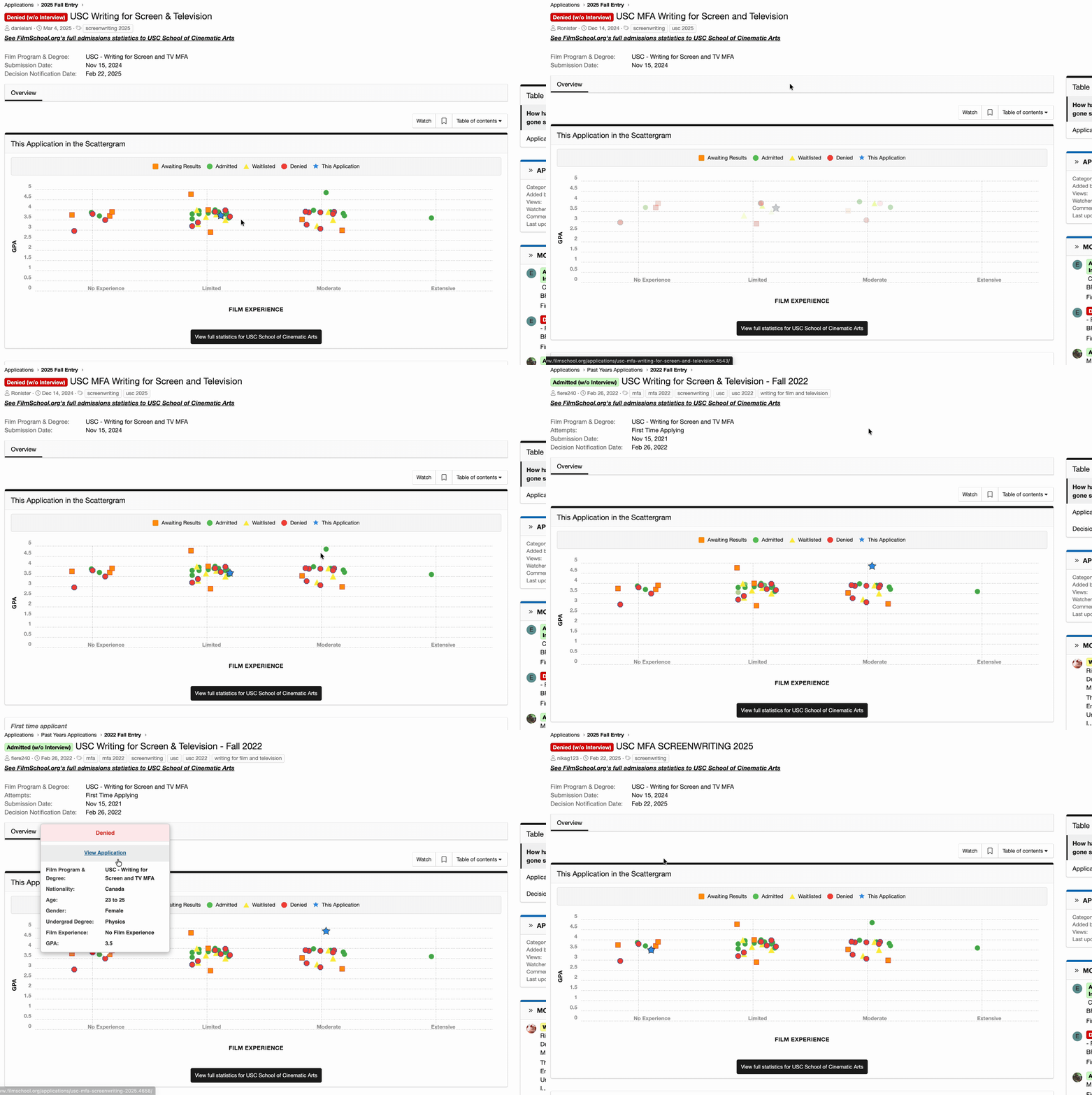
Unlock Film School Admissions Insights
Stop guessing about your chances. See exactly where you stand with real data from 5,000+ applications by becoming a Supporting Member.
This Application in the Scattergram
- See applications plotted by GPA + Film Experience
- View real outcomes: Admitted, Waitlisted, Denied, Awaiting Results
- Hover for full application details
+ 45 Exclusive Admissions Charts
Acceptance rates, reapplication success, interview impact, portfolio breakdowns, and more.
Instant access • Cancel anytime