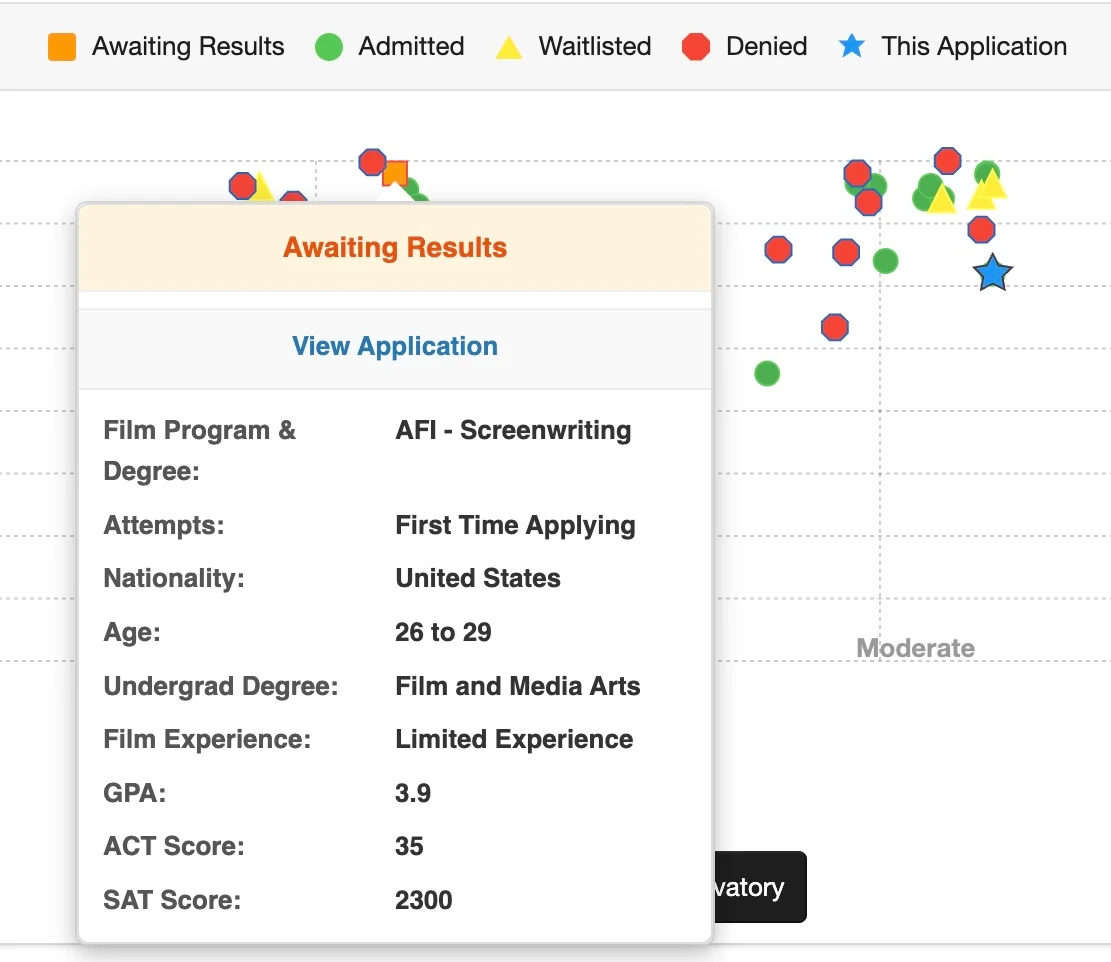
Got into USC and AFI not sure which to choose

I’m currently deciding between the Film Production MFA at USC School of Cinematic Arts and the Screenwriting MFA at AFI My long-term goal is to become a writer-director. Since I studied film and television as an undergraduate, I feel like I already have a strong foundation, which makes parts of USC’s curriculum seem somewhat repetitive. That said, I’m drawn to USC’s larger university environment and the opportunity to direct, which I wouldn’t have at AFI. At the same time, I have a deep love for screenwriting and see it as a strong pathway into directing, which makes AFI’s program very appealing as well.
My main goal in going to film school is to build industry connections and further develop the skill sets I feel are still underdeveloped, so I can enter the industry as a professional filmmaker. Because I genuinely love both screenwriting and directing, this makes the decision especially difficult.I’m ultimately unsure which path will best position me to enter the workforce after graduation, and I’d really love to hear people’s insights.
 
Ultimately I think it just comes down to how confident you are in your directing abilities. If you know you already have a strong portfolio and/or think directing outside of school is a possibility for you, go with AFI. I don’t know much about the school but I do know they are very strict about staying within your chosen discipline.

But, if you want more opportunities to make films and hold production roles both in and out of school in addition to learning screenwriting, go with USC. The first year will probably feel a bit repetitive but it’s also about networking within your cohort and building connections. I know you’re also required to take 3 writing courses, but you’re free to take more. And after the first year there’s more wiggle room to make your own path.
 
This is my two cents as an admittedly biased AFI writing student, but I believe story is the biggest weakness of most aspiring directors I’ve met including within the AFI program. They have a tendency to focus more on the feeling they want to convey with a film rather than the breadth of the story which is where the actual emotional and narrative core of a film lives. Think of it as this: directors tend think of the feeling you have when you leave a film and focus on how to achieve that. Writers think of what you experience on screen as a progressive piece to build to that feeling. When they work harmoniously it’s a cinematic experience.

As a writer when you’re working with a director it’s your job to listen to that part of your director and deconstruct it so that you can figure out the story that ultimately provides the space for that director to create the feeling they want. The issue I so often see with writer directors is without the story foundation to parse how to construct a narrative story that provides the space for that feeling while building out a narrative and emotional core, their work fails to reach its full potential. Simply put, they struggle to take off the director cap and put on the writer cap— often times wearing some chimera of both.

The question I’d have you ask yourself is this: do you have a strong grasp on story? If there is even a shadow of doubt I’d encourage the writing program. It will serve you better as a director than a more broad program like USC. That said AFI will be a writing program exclusively and you will work with directors on all of the films you make there. You can of course make your own films outside of school with the connections you make there and everyone is immensely talented. The trade off to what might be discomforting in working with other directors is that the majority of your work will be focused on creating several full length scripts you will have ready when you finish. Meaning you can write them with resources in mind to produce immediately as the writer and director and they will be more polished than the optional scripts your directing and producing peers may create.

Food for thought.

Beyond that I do think it’s of note that USC does not guarantee you will direct anything. So, there is a chance you may not end up getting to do that at either place. Anecdotally, several of my writing cohort have directed shorts of their own while attending AFI. So, that is a realistic possibility.
 
This is my two cents as an admittedly biased AFI writing student, but I believe story is the biggest weakness of most aspiring directors I’ve met including within the AFI program. They have a tendency to focus more on the feeling they want to convey with a film rather than the breadth of the story which is where the actual emotional and narrative core of a film lives. Think of it as this: directors tend think of the feeling you have when you leave a film and focus on how to achieve that. Writers think of what you experience on screen as a progressive piece to build to that feeling. When they work harmoniously it’s a cinematic experience.

As a writer when you’re working with a director it’s your job to listen to that part of your director and deconstruct it so that you can figure out the story that ultimately provides the space for that director to create the feeling they want. The issue I so often see with writer directors is without the story foundation to parse how to construct a narrative story that provides the space for that feeling while building out a narrative and emotional core, their work fails to reach its full potential. Simply put, they struggle to take off the director cap and put on the writer cap— often times wearing some chimera of both.

The question I’d have you ask yourself is this: do you have a strong grasp on story? If there is even a shadow of doubt I’d encourage the writing program. It will serve you better as a director than a more broad program like USC. That said AFI will be a writing program exclusively and you will work with directors on all of the films you make there. You can of course make your own films outside of school with the connections you make there and everyone is immensely talented. The trade off to what might be discomforting in working with other directors is that the majority of your work will be focused on creating several full length scripts you will have ready when you finish. Meaning you can write them with resources in mind to produce immediately as the writer and director and they will be more polished than the optional scripts your directing and producing peers may create.

Food for thought.

Beyond that I do think it’s of note that USC does not guarantee you will direct anything. So, there is a chance you may not end up getting to do that at either place. Anecdotally, several of my writing cohort have directed shorts of their own while attending AFI. So, that is a realistic possibility.
Thank you for your insight! How does AFI help its writing students career wise? I know that USC has a first jobs program, I was wondering if AFI has something similar?
 
Thank you for your insight! How does AFI help its writing students career wise? I know that USC has a first jobs program, I was wondering if AFI has something similar?
AFI has their pitch fest every fall where producers, agents and managers are invited and the writers each give a pitch.

They also have the bridge to the future program which is similar to USCs first jobs program and is aimed at linking people up with production and assistant jobs.

In addition, the writers have the Writers Room Ready program where they choose 3-4 pilots and pair the writers with industry mentors who are usually showrunners on big shows.

Also, AFI is one of the nominating orgs for the new Nicholls format and gets to submit two scripts. USC did not sign onto that meaning your only submission opportunity is via the black list public submission option.

All of that said, the reality is you’re most likely not going to graduate into a writing job unless you create it for yourself. This is true of both schools. It depends what you want to do, though. If you dig into the data of USC First jobs it began in 2017, 9 years ago, and services all cinematic arts students. Of which there are around 1,500 a year. First jobs has a reach of around 2,000 jobs since its founding. So, about 15% of students across the last 9 years have found a gig through that program. Bridge to the future is similar percentage wise, but obviously a lot less students pass through AFI. My point being, I wouldn’t go to either school for short term job prospects. The benefit is much more long term. These are not jobs programs.

Having not finished, the most helpful thing I’ve gotten professionally are connections with some faculty who I’ve gotten close to and who are mentors for me beyond just regular curriculum.
 
AFI has their pitch fest every fall where producers, agents and managers are invited and the writers each give a pitch.
Interesting. Any recent success from those you've heard of?
These are not jobs programs.
No film school is. Most likely need to PA for first gig no matter what. Grind n hustle. Do good work, be nice, and be contentious and you'll make it.
 
Interesting. Any recent success from those you've heard of?
Yes a handful of people get signed or pair up with producers every year for their projects.
No film school is. Most likely need to PA for first gig no matter what. Grind n hustle. Do good work, be nice, and be contentious and you'll make it.
I agree no film school is but I do think many people have the idea that college=jobs and that’s not true, for basically all college barring technical degrees, but especially film school. So, I try to underscore that when I can.
 
Yes a handful of people get signed or pair up with producers every year for their projects.
Neat!
I agree no film school is but I do think many people have the idea that college=jobs and that’s not true, for basically all college barring technical degrees, but especially film school. So, I try to underscore that when I can.
Yes and especially in this film job market. Things have gotten strange and slow for some even very experienced people but knock on wood I've been ok so far. I did have way more downtime than usual this year though. I'm usually able to find filler gigs between seasons pretty quickly but it was harder this year.
 
Log your film school application with our Application Database so that we can improve our admissions statistics.


Users who are viewing this thread


Latest Accepted Applications

This Application in the Scattergram

Exclusive Supporting Member Benefits

Peak behind the admissions curtain. Supporting Members unlock full access to insightful data, interviews, and more...

Instant Keyword Alerts
Visible Supporter Badge & Highlighted Profile
Share Subscription with one family member or friend

Instant access • Cancel anytime

Latest Film School Reviews

  • USC School of Cinematic Arts
    5.00 star(s)
    Best Film School in the world
    I am eternally grateful to everything USC has done for me, especially as an international student; it has closed learning gaps that would have...
    • Anonymous
  • Sacred Heart University - School of Communication, Media & the Arts
    5.00 star(s)
    FTMA: Professional AND Personal Growth
    FTMA was an integral part of my development process as a filmmaker and a human being. Through this program, I learned discipline, follow-through...
    • Anonymous
  • Antioch University - Low-residency MFA in Creative Writing
    5.00 star(s)
    Great Program
    Obtaining my MFA is something that I have considered for many years. However, it never seemed like the right time. Antioch made it the right time...
    • Anonymous
  • Antioch University - Low-residency MFA in Creative Writing
    5.00 star(s)
    A Deeper layer to writing, art and connection
    Antioch's MFA in Dramatic Writing is unlike any program I've encountered. What sets it apart immediately is the mentorship model — your mentors...
    • Anonymous
  • NYFA - New York Film Academy (Los Angeles Campus)
    1.00 star(s)
    Military Avoid as if your life depends on it
    This school is a freaking NIGHTMARE. I was sexually harassed and bullied by foreigners in my class and the school took their side because they...
    • Anonymous

Latest Applications

Latest questions

Latest Articles

Latest Accepted Applications

Applications
Articles
Forums
Film Schools
Scholarships
Back
Top