
-
Supporting Membership Pricing Increasing on May 1 for New Subscriptions
To continue expanding the exclusive tools, producing more in-depth interviews with admissions teams, and keeping FilmSchool.org completely ad-free and unbiased, Supporting Membership prices for new subscriptions will increase starting May 1st.

Similar threads


- Question

Users who are viewing this thread
Unlock Film School Admissions Insights
Stop guessing about your chances. See exactly where you stand with real data from 5,000+ applications by becoming a Supporting Member.
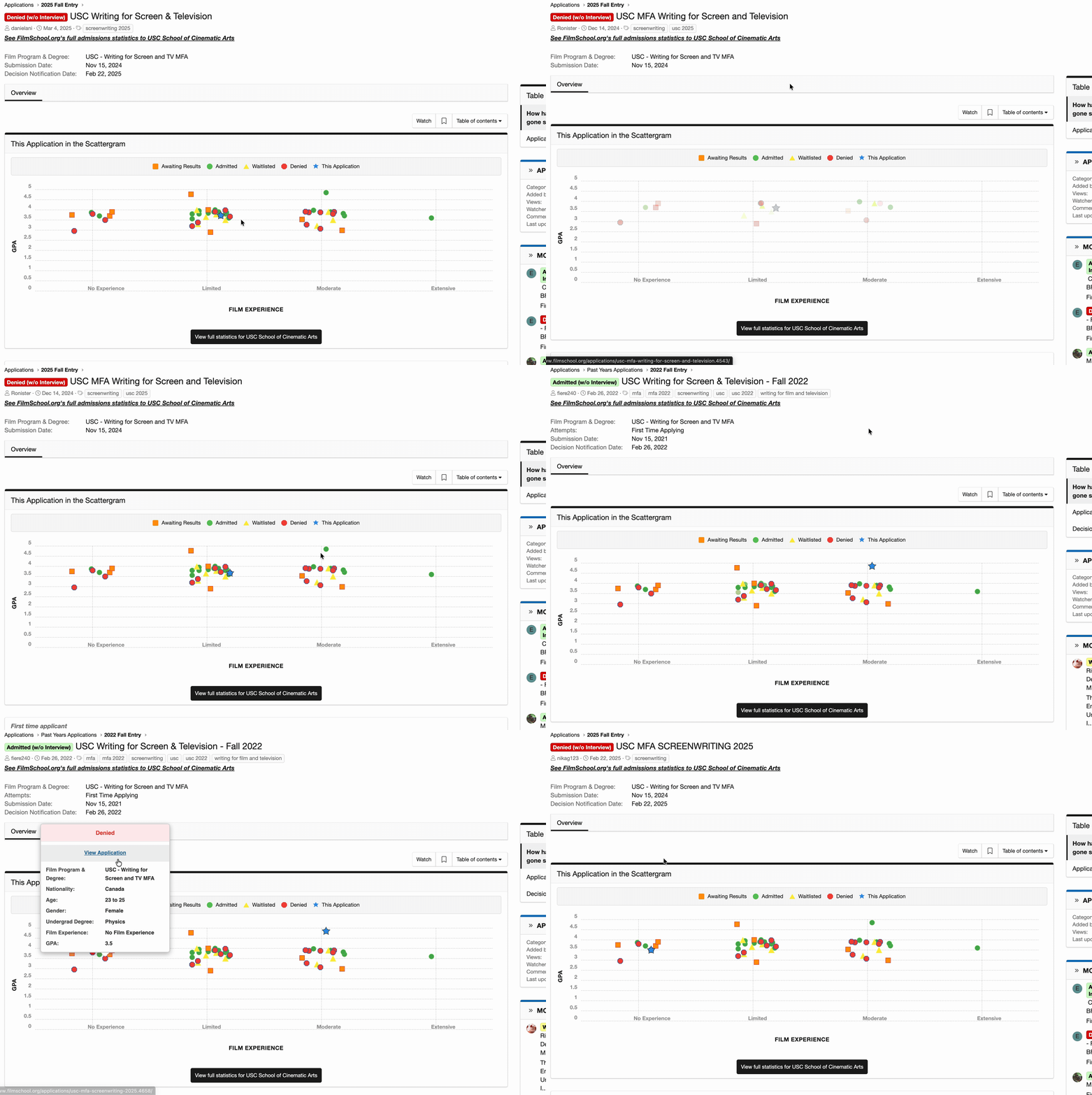
This Application in the Scattergram
- See applications plotted by GPA + Film Experience
- View real outcomes: Admitted, Waitlisted, Denied, Awaiting Results
- Hover for full application details
+ 45 Exclusive Admissions Charts
Acceptance rates, reapplication success, interview impact, portfolio breakdowns, and more.
Instant access • Cancel anytime
Latest posts
-

-

-
A
Popular Threads
-
Columbia Film School MFA Applicants 2026
- Started by Chris W
- Replies: 304
- Film School Application Year Threads
-
Chapman Film School MFA Applicants 2026
- Started by Chris W
- Replies: 131
- Film School Application Year Threads
-
AFI Applicants 2026 - Who's applying?
- Started by Chris W
- Replies: 120
- Film School Application Year Threads
-

USC MFA - Film and Television Production - Fall 2026
- Started by vichobarraza
- Replies: 107
- Film School Application Year Threads
-
NYU MFA – Film and Television – Fall 2026
- Started by vichobarraza
- Replies: 86
- Film School Application Year Threads
-
UCLA TFT MFA Applicants 2026
- Started by Chris W
- Replies: 58
- Film School Application Year Threads
-
NYU Dramatic Writing MFA Fall 2026
- Started by iammclovin
- Replies: 53
- Film School Application Year Threads
-
UT Austin MFA Film 2026
- Started by Terry Yu
- Replies: 45
- Film School Application Year Threads
-
USC SCA Spring 2026
- Started by beyon95est
- Replies: 39
- Film School Application Year Threads

Latest Film School Reviews
-
DePaul University - School of Cinematic ArtsOverall goodWhile I was there, parts of the directing track felt like they were still evolving, so the quality of classes was a bit uneven. Some were...
- Anonymous
-
Stony Brook University (SUNY)Stony Brook TV Writing MFAI love this program so much. If you are interested in TV Writing this is the best program for it. We have incredibly talented writers and the...
- glafmay1
-
San Diego State University - School of Theatre, Television, and FilmNothing specialYou really kind of get what you pay for with this program. It might be one of the cheapest programs out there but it’s also one of the most...
- Anonymous
-
USC School of Cinematic ArtsUSC is a LighthouseThe School of Cinematic Arts has essentially been created in the image of a corporate film studio. Artistically successful films you make at this...
- Anonymous
-
 Full Sail UniversitySelf Motivated? You'll Do FineI did the 27 month, online, Digital Cinematography Bachelor’s degree at Full Sail. It is basically a film degree with the added focus of trying to...
- Pryde Pierce
Latest Applications
-
Attending (Off Waitlist After Interview) Columbia Film MFA - Writing for Film & TVI lost contact with one recommender and wasn't...
- anything_at_all
- Updated:
-
Admitted (Off Waitlist After Interview) Chapman - Directing MFAChapman's application was a lot of fun. I...
- Noahm
- Updated:
-
Admitted (After Interview) LMU MFA film and tv productionApplication went pretty smoothly. Their...
- cheeseplank
- Updated:
-
Interviewed Columbia College Chicago - Film and Television DirectingFirst time applying. Applying on March 1st, far later than I wanted, but opted to finalize a...
- dbrown40202
- Updated:
-
Admitted (After Interview) AFI MFA Editing - Fall 2026First year applying for Film MFA programs. At this point I have been waitlisted for...
- Pryde Pierce
- Updated:

Latest questions
-
 Brooklyn College (CUNY) - Feirstein Graduate School of CinemaI am deciding between DePaul's MFA program and this school, and I was hoping to hear any input from alumni, current students, or anyone who knows...
- Sosharp233
-
 Columbia University's School of the ArtsI am checking to see if others have received notification that Columbia’s deadline for their MFA film application has been extended until December...
- zk-writer-01
-
Stockholm University of ArtsHello. I am seriously thinking about applying to SKH, but I have no idea how the application process happens. Does anyone here know that? Thanks...
- IgorCL
-
Syracuse UniversityHow about now after a whole year? How are the connections plus the production side of the sets?
- anynonmous78
-
California Institute of the Arts (CalArts)Does anyone know the acceptance rate for the MFA in PFV and/or the Film Directing programs? Im thinking of applying for 2026
- reproducibility_
Latest Articles
-
 CU Denver Film & Television Program Admissions: Tips from David Liban, Department Chair (Part 1)The University of Colorado Denver is one of the best institutions in the Western US for...
- Alexa Pellegrini
- Updated:
- 10 min read
-
CU Denver Film & Television Program Admissions: Tips from David Liban, Department Chair (Part 2)In the second and final part of our interview, Alexa Pellegrini continues the discussion with...
- Alexa Pellegrini
- Updated:
- 13 min read
-
How to Get Into the University of Hartford's Cinema Program: Insights from the Director and Admissions (Part 1)Tucked away in the capital city of Connecticut, the University of Hartford's Cinema program is...
- Alexa Pellegrini
- Updated:
- 11 min read
-
How to Get Into the University of Hartford's Cinema Program: Insights from the Director and Admissions (Part 2)In the final part of our exclusive interview, the University of Hartford's Lauren Cook, Director...
- Alexa Pellegrini
- Updated:
- 13 min read
-
Top 10 Fully Funded MFA Film Programs with Generous Stipends in the US and CanadaEven with financial aid, getting your MFA in film might be too costly. Many of the world's most...
- Alexa Pellegrini
- Updated:
- 17 min read
Latest Accepted Applications
-
Admitted (After Interview) LMU MFA film and tv productionApplication went pretty smoothly. Their...
- cheeseplank
- Updated:
-
Admitted (After Interview) AFI MFA Editing - Fall 2026First year applying for Film MFA programs. At this point I have been waitlisted for...
- Pryde Pierce
- Updated:
-
Admitted but Not Attending (After Interview) MFA Film - Creative Producing - 2026Loved the process, got accepted, had to decline
- Medeina
- Updated:
-
Admitted but Not Attending (After Interview) Brooklyn College fall 2026Was a smooth process that took a bit longer to...
- Words
- Updated:
-
 Admitted (w/o Interview) City College of New York MFA in FilmFirst Time Applying. The whole process is smooth and straightforward.
- CLChou
- Updated:
Most messages
-
9,889
Chris W
-
867
Alexa P.
-
479
Winterreverie
-
 477
477Mike_V
-
 433
433IndecisiveElle
-
426
titaniumdoughnut
-
 371
371StarChild
-
368
Bandar Albuliwi
Highest reaction score
-
4,301
Chris W
-
782
Alexa P.
-
 593
593Septopus7
-
434
truffleshuffle
-
 383
383Abbey Normal
-
374
IndecisiveElle
-
 359
359BuddernScotch
-
 351
351its_me_mari
-
347
StarChild
-
 332
332FD97